


Description
The Anatomy of an Icon: A 6000-Word Exploration of the Modern Oversized mens half sleeve tshirt Cotton
Introduction: More Than Just a Garment
In the vast and ever-evolving landscape of fashion, few items claim the universal, timeless, and revolutionary status of the t-shirt. From its humble beginnings as an undergarment for soldiers and laborers to its adoption as a blank canvas for counter-culture, high art, and personal identity, the t-shirt has woven itself into the very fabric of global society.
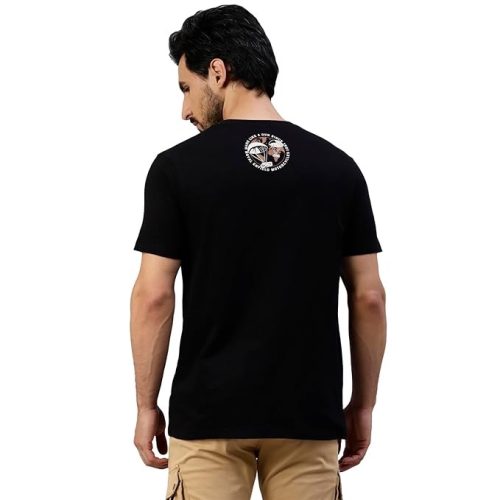
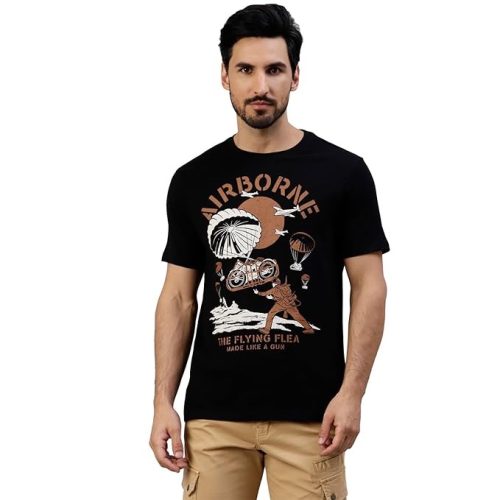
This document delves deep into a specific iteration of this iconic garment: the 100% Cotton, Graphic, Oversized, Round-Neck, Half-Sleeve T-Shirt, manufactured in India. What appears as a simple product description— mens half sleeve tshirt
a list of features and materials—is, in reality, a nexus of design theory, material science, cultural anthropology, and economic history. We will dissect each component, exploring its history, its functional and aesthetic purpose, its manufacturing context, and its ultimate meaning to the wearer. This is not merely a description of a t-shirt; it is a biography of an object and an exploration of why it matters. mens half sleeve tshirt
Chapter 1: The Foundation – Unpacking “100% Pure Cotton”
The declaration “100% Pure Cotton” is the cornerstone of the product’s value proposition. But what does this truly entail?
1.1 A Historical Legacy: The King of Fibers
Cotton’s history spans over 7,000 years, with evidence of its use in the Indus Valley Civilization, precisely in the regions that constitute modern-day India and Pakistan. This directly connects your garment to an ancient legacy of textile craftsmanship. The journey of cotton from plant to shirt is a marvel of human ingenuity.
We will explore the botany of the Gossypium plant, the process of ginning (separating seed from lint), spinning (turning lint into yarn), and weaving or knitting (turning yarn into fabric). The specific type of knit used for t-shirts is called “jersey knit,” characterized by its flat front and loopy back, which gives it its signature stretch and comfort.mens half sleeve tshirt
1.2 The Science of Comfort: Breathability and Hygroscopicity
The supremacy of cotton is rooted in its natural properties. Unlike synthetic fibers like polyester, which are essentially plastic, cotton is a cellulose-based fiber. Its structure is porous and absorbent. This leads to two key qualities:mens half sleeve tshirt
-
Breathability: The gaps between the fibers allow air to circulate freely against the skin. This facilitates the evaporation of sweat and regulates body temperature, making it “comfortable for your classic everyday look” in a wide range of climates.mens half sleeve tshirt
-
Hygroscopicity: Cotton can absorb up to 27% of its weight in moisture from the skin before it feels damp. This wicking action pulls perspiration away from the body, contributing to a feeling of dry comfort. This section would detail the molecular structure of cellulose and how it bonds with water molecules.mens half sleeve tshirt
1.3 Sensory and Practical Qualities: Hand Feel, Durability, and Care
Pure cotton is celebrated for its soft “hand feel” (the tactile quality of the fabric), which improves with each wash. We will examine how yarn thickness (measured in counts like 18s, 20s, 30s) and the finishing processes (like brushing or singeing) affect this softness. Furthermore, cotton’s durability and tensile strength make it resistant to wear and tear.
However, it is prone to shrinkage if not pre-shrunk during manufacturing and can wrinkle easily. This chapter would include a detailed guide on proper garment care: washing in cold water, tumble drying low, and ironing at moderate temperatures to maintain the integrity and size of the oversized fit over time.mens half sleeve tshirt
1.4 Ethical and Environmental Considerations
The “Pure Cotton” label also invites a discussion on sustainable and ethical practices. This includes the difference between conventional cotton, which is heavily reliant on pesticides and water, and organic cotton, which follows stricter environmental guidelines. We will explore initiatives like the Better Cotton Initiative (BCI) and the overall impact of the cotton industry, framing the consumer’s choice within a larger global context.mens half sleeve tshirt
Chapter 2: The Silhouette – Deconstructing the “Oversized Baggy Fit”
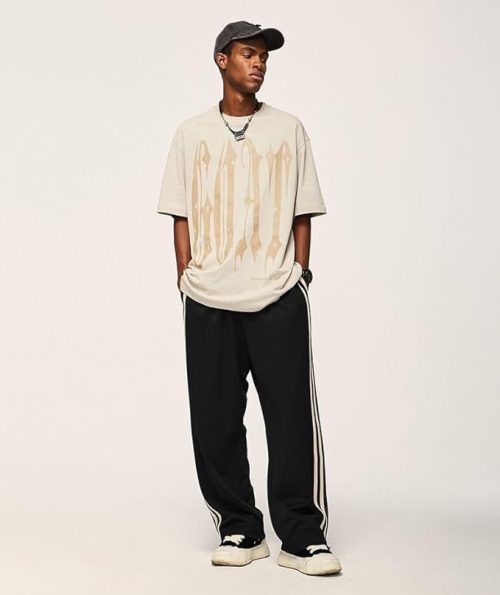
The “fit type” is the most powerful stylistic choice defining this garment. The oversized fit is not a manufacturing error; it is a deliberate design philosophy.mens half sleeve tshirt
2.1 A Historical Shift: From Function to Fashion
The fit of clothing has always reflected societal values. The post-WWII era favored structured, fitted silhouettes that conveyed conformity and propriety. The rise of the oversized fit can be traced to several cultural movements:
-
The Birth of Hip-Hop (1970s-80s): Artists and dancers adopted larger clothing for freedom of movement, often borrowing from siblings or buying sizes up to ensure longevity as they grew. This became a signature anti-establishment aesthetic.mens half sleeve tshirt
-
Grunge and Alternative Culture (1990s): Bands like Nirvana and Sonic Youth championed a thrift-store, androgynous look characterized by flannel shirts and slouchy, oversized t-shirts, rejecting the glamour and excess of the 1980s.mens half sleeve tshirt
-
High Fashion Adoption (2010s-Present): Designers like Demna Gvasalia for Balenciaga and Vetements took streetwear silhouettes and elevated them to high fashion, cementing the oversized look as a modern, avant-garde statement.mens half sleeve tshirt
2.2 The Psychology of Volume: Comfort, Identity, and Statement
Choosing an oversized fit is a conscious decision that communicates specific values:
-
Ultimate Comfort: It represents a prioritization of physical ease and freedom from restrictive clothing. It is a garment that allows the body to exist without constriction or judgment.mens half sleeve tshirt
-
Androgyny and Inclusivity: The oversized fit often deliberately obscures the body’s traditional gendered contours. This makes it a popular and powerful choice within gender-fluid fashion, offering a silhouette that is not explicitly masculine or feminine.mens half sleeve tshirt
-
Confidence and Attitude: Contrary to old fashion rules that associated baggy clothes with sloppiness, the modern oversized fit is worn with intention. It projects a sense of effortless cool, self-assurance, and a rejection of overly curated, body-conscious trends.mens half sleeve tshirt
2.3 Styling the Silhouette: Practical Fashion Theory
This section would serve as a practical guide for the wearer. How does one style an oversized t-shirt to achieve a balanced, intentional look?mens half sleeve tshirt
-
Contrast with Fitted Bottoms: The most common approach is to pair the voluminous top with slim-fit jeans, bicycle shorts, or tailored trousers. This creates a harmonious silhouette that avoids looking shapeless.mens half sleeve tshirt
-
The “Tucked” Look: Partially tucking the front of the t-shirt into high-waisted pants or a skirt can define the waist and add structure while maintaining the oversized vibe.mens half sleeve tshirt
-
Layering: Using the oversized tee as a layer under jackets, vests, or even another shirt (a technique known as peek-a-boo layering) adds depth and texture to an outfit.mens half sleeve tshirt
Chapter 3: The Canvas – The Language of “Graphic” Pattern
A graphic transforms a basic tee into a communicator. It is a medium for personal expression, brand identity, and artistic statement.mens half sleeve tshirt
3.1 A Brief History of the Graphic Tee
The graphic tee’s origins are in protest and propaganda. In the 1930s, a Sears Roebuck t-shirt was used to promote the movie The Wizard of Oz. However, it was the mid-20th century that saw its explosion:mens half sleeve tshirt
-
1950s: Screen-printing technology advanced, allowing for more complex designs. Marlon Brando and James Dean made the plain white tee a symbol of rebellion.mens half sleeve tshirt
-
1960s-70s: The tee became a walking billboard for rock bands (think The Rolling Stones’ tongue and lips logo) and political movements (peace signs, anti-war slogans).
-
1980s-90s: The rise of streetwear brands like Stüssy and Supreme and the explosion of hip-hop culture turned graphic tees into coveted cultural artifacts and status symbols.
3.2 The Semiotics of Graphics: What Does Your Tee Say?
Every graphic communicates. This section analyzes the potential messages:
-
Band & Brand Logos: Signals affiliation, taste, and tribal identity. It’s a way of saying, “I belong to this group” or “I support this brand’s ethos.”
-
Artistic Designs: From abstract patterns to illustrations, these graphics turn the wearer into a mobile art exhibit, reflecting their aesthetic preferences.
-
Slogans & Text: The most direct form of communication. It can be witty, political, philosophical, or nonsensical, serving as a direct mouthpiece for the wearer’s thoughts.
-
Vintage & Retro Designs: Often evoke nostalgia and a curated, knowledgeable taste, suggesting an appreciation for the past.
3.3 Printing Techniques: From Screen Printing to DTG
The quality and feel of the graphic are determined by the printing method:
-
Screen Printing: The traditional method. Ink is pushed through a mesh screen onto the garment. It offers vibrant colors and high durability but is less cost-effective for small, detailed designs.
-
Direct-to-Garment (DTG): Like an inkjet printer for fabric. It excels at complex, photorealistic designs with many colors but can feel slightly different on the fabric and may have different longevity.
-
Heat Transfer: A design is printed on transfer paper and applied with heat and pressure. Can sometimes feel plasticky and crack over time.
-
Embroidery: Adds a tactile, premium, and durable element, though it is less common for large, detailed graphics.
This chapter would analyze the likely production methods for this product and their implications for feel and durability.
Chapter 4: The Architecture – Collar, Neck, and Sleeve Design
The “Round Neck” and “Half Sleeve” are described twice, emphasizing their fundamental importance to the garment’s architecture.
4.1 The Round Neck: A Study in Timelessness
The round neck, or crew neck, is the undisputed classic of t-shirt designs. Its circular opening sits snugly around the base of the neck. Its universality is its strength. It is unassuming, versatile, and suits virtually every face shape and body type. We will trace its history from standard-issue military underwear to its adoption by American football teams and eventually into mainstream civilian wear. Its design is one of pure function evolved into perfect form.
4.2 The Half Sleeve: Balancing Coverage and Breathability
The half-sleeve (or short sleeve) is the default for warm-weather comfort. Its length, typically ending mid-bicep, provides modesty and protection from the sun while maximizing airflow to the body’s core. The construction of the sleeve is crucial: a well-set sleeve lies flat against the body, while a poorly constructed one can bunch and twist. In an oversized fit, the sleeve is deliberately cut with more volume, contributing to the overall slouchy, relaxed aesthetic. The hem of the sleeve and the main body are often finished with a ribbed band, though in some modern oversized designs, this band is omitted for a softer, more deconstructed look.
4.3 The Absence of a Collar: Defining Casual
The deliberate choice of a round neck instead of a polo shirt collar is a definitive statement of casualness. It places this garment firmly in the realm of informal wear, leisure, and personal expression, distinct from the more formal connotations of a collared shirt.
Chapter 5: The Origin Story – “Country of Origin: India”
This single line is a gateway to understanding global trade, economic history, and artisan craftsmanship.
5.1 India’s Textile Dominion: A Legacy Woven in Time
India is not just a manufacturer; it is the historical birthplace of cotton craftsmanship. For centuries, Indian textiles like Dhaka muslin, Calico (named after Calicut), and Bandhani were coveted global commodities, traded along the Silk Road and fought over by colonial powers. The Indian subcontinent’s dominance in cotton spinning and weaving was the very catalyst for the British Industrial Revolution, which sought to mechanize and compete. Today, India is one of the world’s largest producers and exporters of cotton yarn and fabric.
5.2 Modern Manufacturing: Scale, Skill, and Value
The fact that this t-shirt is made in India speaks to the country’s immense manufacturing capacity, skilled labor force, and competitive production costs. It represents a complex supply chain involving cotton farmers, ginners, spinners, knitters, dyers, cutters, printers, and seamstresses. This chapter would explore the conditions of modern garment manufacturing, the importance of ethical factory audits, and how a consumer’s purchase is a direct link in this global chain. It adds a layer of narrative and place to the object, connecting the wearer to a specific part of the world and its people.
Chapter 6: The Holistic Experience – “Pack Contains: 1” and “Everyday Look”
6.1 The Singular Product: Focus and Intentionality
The note “Pack Contains: 1 Oversized T-Shirt” underscores a shift away from the multi-pack basics toward a focus on the individual, statement piece. This is not a generic undershirt; it is a considered fashion item purchased for its specific design, fit, and graphic. It encourages a move away from fast fashion’s volume toward a more curated, sustainable wardrobe of pieces loved and worn repeatedly.
6.2 The Philosophy of the “Classic Everyday Look”
This marketing phrase encapsulates the entire purpose of the garment. It promises versatility, reliability, and foundational style. It is the sartorial equivalent of a comfort food—a item you can reach for without thought that consistently makes you feel good. It builds on the notion of a “capsule wardrobe,” where a few high-quality, versatile pieces form the basis of one’s entire style. This t-shirt, with its neutral fit and communicative graphic, is positioned to be exactly that: a cornerstone of modern, effortless, and expressive daily dressing.
Chapter 7: The Philosophy of Casualwear: Deconstructing “Comfort”
The promise of being “more comfortable for your classic everyday look” is the product’s ultimate value proposition. But “comfort” is a complex, multi-sensory state that operates on both physical and psychological levels.
7.1 The Physics of Physical Comfort
Physical comfort is an engineering problem. It involves:
-
Thermoregulation: As previously explored with cotton’s breathability, this is the body’s ability to maintain its core temperature. The oversized fit amplifies this by creating a microclimate of air between the fabric and the skin. This layer of stagnant air acts as insulation in cool weather and, crucially, allows for convective cooling in warm weather as air moves freely, evacuating body heat and moisture vapor. We can model this using principles of heat transfer and fluid dynamics.
-
Tactile Sensation (Somatosensation): This is the response of nerve endings in the skin to the fabric. Pure cotton, especially after several washes, has a low coefficient of friction against the skin. It feels soft and non-abrasive. The oversized fit eliminates “bind points”—areas where tight clothing constricts movement or applies pressure (e.g., across the shoulders, chest, or waist). This freedom of movement is a primary component of physical ease, reducing muscle fatigue and skin irritation over a full day of wear.
-
Ergonomics of Design: The garment must be comfortable in dynamic states—sitting, bending, reaching, driving. The dropped shoulders and wider armholes of an oversized cut allow for a greater range of motion without the fabric pulling or straining at the seams. The length of the body prevents it from riding up and exposing skin.
7.2 The Psychology of Psychological Comfort
Psychological comfort is arguably more important in the context of fashion. It is the feeling of confidence, assurance, and “rightness” one has while wearing a garment.mens half sleeve tshirt
-
Authenticity and Self-Expression: When the graphic on the shirt aligns with the wearer’s identity, beliefs, or tastes, it creates a state of cognitive consonance. Wearing a band you love, an artist you admire, or a slogan you believe in feels authentic. This authenticity reduces social anxiety and projects self-assurance.mens half sleeve tshirt
-
The “Armor” Effect: Clothing can act as a social shield. The intentional bagginess of the oversized fit can provide a sense of protection and anonymity. It allows the wearer to observe without being overly observed, to participate in society while maintaining a degree of personal space. This is particularly relevant in the modern era of hyper-visibility and social media scrutiny.mens half sleeve tshirt
-
Normcore and the Rejection of “Fashion”: The embrace of a “classic everyday look” can be seen as an adoption of “normcore” – a trend that finds liberation in simplicity and rejects the frantic pace of trend-based fashion. The comfort comes from not having to think about it; it’s a uniform of efficiency and understated confidence. It is a deliberate step away from the pressure to be constantly novel and curated.mens half sleeve tshirt
Conclusion: The Sum of Its Parts
What begins as a simple list—Cotton, Graphic, Oversized, Round Neck, Half Sleeve, India—reveals itself to be a rich tapestry interwoven with threads of history, science, psychology, art, and global economics. This oversized cotton t-shirt is a microcosm of modern fashion itself. It is a testament to how a seemingly simple object can carry the weight of cultural history, embody contemporary values of comfort and expression, and represent the intricate workings of our globalized world. It is not merely an item of clothing; it is a tool for identity, a canvas for art, a product of human ingenuity, and a testament to the enduring, evolving power of the humble t-shirt.mens half sleeve tshirt




Reviews
There are no reviews yet.