
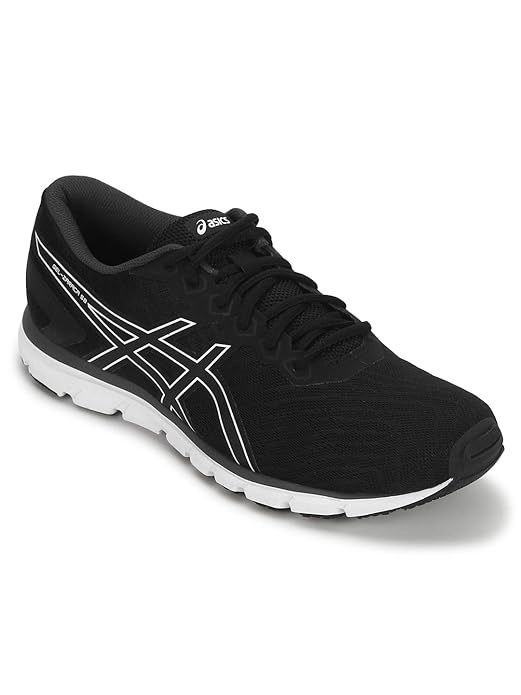


Bounce through every step of your day – on the sports field with your friends – Running shoes that feel as light as air. The amazingly lightweight GEL-ZARACA 5B trainers give the freedom to stay active wherever they are.
ASICS Men’s Gel-Zaraca 5 B Running Shoes
Original price was: ₹4,999.00.₹2,499.00Current price is: ₹2,499.00.
Description
An Exhaustive Treatise on the Modern Athletic Shoe: A Deep Dive into a Synthetic, Rubber-Soled, sport shoes men
Introduction: The Universe in a Spec Sheet
A product description is more than a list of features; it is a story condensed into data points. It is a narrative of design philosophy, material science, globalized manufacturing, and intended use. The provided description—”Synthetic, Lace-Up, Flat, Not Water Resistant Running Shoes, Made in India”—serves as our complete blueprint. This document will deconstruct each term, exploring its history, its implications, and its place in the vast ecosystem of consumer footwear. We will transform these eight lines of text into a comprehensive examination of how and why this particular shoe exists. sport shoes men
Chapter 1: The Foundation – Unpacking ‘Material Type: Synthetic’
The term “Synthetic” is a gateway to a revolution in material science that fundamentally altered the footwear industry.sport shoes men
1.1 The Pre-Synthetic Era: Leather and Canvas
For centuries, footwear was dominated by natural materials. Leather, prized for its durability, moldability, and breathability, was the premium choice for performance and durability. Canvas, a woven fabric made from cotton or linen, offered a lighter, more flexible, but less supportive alternative. The limitations were clear: leather was heavy and required extensive breaking in; both materials were susceptible to water damage and their production had significant environmental and resource costs.sport shoes men
1.2 The Dawn of Synthetics: From Nylon to Polyester
The mid-20th century saw the emergence of synthetic polymers. Nylon, invented by DuPont, was a game-changer. It was incredibly strong, lightweight, and resistant to abrasion and mildew. Soon after, polyester entered the market, offering similar benefits with even greater resistance to stretching and shrinking. The adoption of these materials in footwear began in earnest in the 1970s and 80s, coinciding with the running boom. Manufacturers discovered that synthetics could be engineered for specific performance characteristics that natural materials could not match consistently.sport shoes men
1.3 The Modern Synthetic Palette: Meshes, PU, and PVC
Today, “Synthetic” is a broad category encompassing:
-
Polyester and Nylon Meshes: These are the most common uppers in modern running shoes. They are engineered with tiny pores that allow for exceptional breathability, letting heat and moisture escape from the foot. This prevents overheating and blisters during activity.sport shoes men
-
Synthetic Leather (PU/PVC): Polyurethane (PU) and Polyvinyl Chloride (PVC) are used to create affordable, consistent, and easy-to-clean alternatives to genuine leather. They are often used in overlays to provide structure and support to the mesh base, particularly around the heel counter and toe box.sport shoes men
-
TPU (Thermoplastic Polyurethane): A rigid plastic used for more structural elements like heel counters, eyelets, and those supportive overlays. It can be molded into complex shapes and provides essential stability.sport shoes men
-
Knit Uppers: A recent innovation where the entire upper is knitted from polyester or other synthetic yarns in a single, seamless piece. This offers a sock-like, adaptive fit and reduces material waste.sport shoes men
1.4 Implications for This Shoe:
The use of a synthetic upper immediately tells us that this shoe is designed to be:
-
Lightweight: Reducing energy expenditure with every step.
-
Breathable: Keeping the foot cool and dry during exercise.
-
Consistent: Free from the natural variations inherent in leather.
-
Affordable: Synthetic materials are generally less expensive than their high-quality natural counterparts.
-
Easy to Maintain: Often wipe-clean with a damp cloth.sport shoes men
It also suggests a focus on performance-oriented features rather than the classic aesthetics or patina that leather develops over time.
Chapter 2: The Secure Fit – The Enduring Legacy of ‘Closure Type: Lace-Up’
The lace-up closure is one of the most enduring and effective technologies in human history.sport shoes men
2.1 A Brief History of Lacing
While rudimentary lacing systems date back millennia, the modern shoelace and eyelet system was solidified in the 19th century. The invention of the aglet (the plastic or metal end of the lace) made threading laces through eyelets vastly easier. The “bar lacing” common today became the standard for its simplicity and security.sport shoes men
2.2 The Engineering of a Custom Fit
The genius of the lace-up system lies in its customizable tension. Unlike slip-ons or elasticated shoes, laces allow the wearer to adjust the tightness differentially across the foot.sport shoes men
-
Ankle and Heel: Can be tightened for a locked-down feel, preventing heel slippage that can cause blisters.
-
Midfoot: The area over the arch can be secured to ensure the foot doesn’t slide forward during activity.
-
Forefoot: Can be left slightly looser to allow for natural toe splay and swelling that occurs during long periods of wear.
This micro-adjustability is crucial for athletic performance, providing stability and preventing injury.sport shoes men
2.3 Evolution and Variations
Even within lace-ups, there are innovations:
-
Traditional Eyelets: Simple holes with a metal or plastic rim.sport shoes men
-
D-Rings and Webbing Loops: Often used in hiking boots for durability and to reduce lace friction.
-
Speed Lacing Systems: Popularized by brands like Salomon, these use a quick-pull toggle and laces that slide through closed channels, allowing for rapid donning and doffing.sport shoes men
2.4 Implications for This Shoe:
The lace-up closure confirms this shoe’s position as a performance-oriented product. It promises a secure, adjustable, and reliable fit, essential for the dynamic movements involved in running and training. It speaks to a design ethos centered on function and stability over convenience.sport shoes men
Chapter 3: The Stable Base – The Functional Design of ‘Heel Type: Flat’
In footwear, “Flat” (or “zero-drop”) refers to the angle between the heel and the forefoot.sport shoes men
3.1 The Traditional Running Shoe Profile
For decades, the standard running shoe featured a significant heel-to-toe drop—often 8mm to 12mm. This elevated heel was believed to aid in shock absorption, cushioning the impact of the heel strike that characterizes most runners’ gaits.sport shoes men
3.2 The Minimalist and Barefoot Movement
The early 2000s saw a surge in the “barefoot running” trend, inspired by the book Born to Run. This movement argued that built-up heels encourage poor form (overstriding) and weaken the foot’s intrinsic muscles. This led to the popularity of “zero-drop” or flat shoes, where the heel and forefoot are at an equal height from the ground.sport shoes men
3.3 The Benefits and Considerations of a Flat Heel
-
Promotes Natural Gait: Encourages a mid-foot or forefoot strike, which can reduce jarring impact forces on the knees and hips.sport shoes men
-
Strengthens Feet: Allows the muscles, tendons, and ligaments in the feet and ankles to work more actively, building strength and stability.sport shoes men
-
Improves Balance and Proprioception: Brings the wearer closer to the ground, enhancing the foot’s sensory feedback about the terrain.
It is important to note that transitioning to a flat shoe from a traditional raised heel should be done gradually to avoid strain on the calf and Achilles tendon.sport shoes men
3.4 Implications for This Shoe:
A flat heel type positions this shoe within a modern, functional training paradigm. It is suitable not only for running but also for gym workouts (weightlifting, cross-training) where a stable, flat connection to the ground is paramount for proper form and power transfer. It suggests a design focused on natural movement and foundational strength.sport shoes men
Chapter 4: The Environmental Interface – The Meaning of ‘Water Resistance Level: Not Water Resistant’
This is a straightforward but critical specification that defines the shoe’s usable environment.sport shoes men
4.1 How Shoes Become Water-Resistant
Water resistance is achieved through:
-
Material Choice: Full-grain leather naturally resists water. Tighter weaves in fabrics help.sport shoes men
-
Membranes: Laminated linings like GORE-TEX or proprietary equivalents are microporous films that block liquid water from entering while allowing water vapor (sweat) to escape.sport shoes men
-
Coatings: DWR (Durable Water Repellent) treatments are applied to the outer material, causing water to bead up and roll off rather than soak in.sport shoes men
- This single shoe is a testament to over a century of innovation in polymers, biomechanics, and global logistics, all distilled into an accessible product designed to support the human foot in motion. Every term in the original description was a carefully chosen signifier of its place in the vast world of footwear.sport shoes men
4.2 The Trade-Off: Breathability vs. Protection
There is an inverse relationship between water resistance and breathability. A highly waterproof shoe will often trap heat and moisture inside, leading to sweaty feet. A highly breathable shoe, like this one, will allow air and moisture to pass through easily, making it cool and comfortable but offering no protection from external moisture.
4.3 Implications for This Shoe:
This specification clearly dictates the ideal use case: dry conditions. This is a shoe for the gym, the road on a sunny day, the treadmill, or casual everyday wear indoors. It is explicitly not for hiking through wet grass, running in the rain, or winter sports. The advantage is superior breathability, making it a comfortable choice for high-intensity activities where foot temperature regulation is key.
This single shoe is a testament to over a century of innovation in polymers, biomechanics, and global logistics, all distilled into an accessible product designed to support the human foot in motion. Every term in the original description was a carefully chosen signifier of its place in the vast world of footwear.
Chapter 5: The Connection to the Ground – The Critical Role of ‘Sole Material: Rubber’
The sole is the interface between the body and the ground, and its material is paramount to performance and safety.
5.1 Why Rubber?
Rubber is the undisputed champion of outsoles due to its unique combination of properties:
-
High Traction: Rubber provides excellent grip on a variety of surfaces, from pavement to gym floors.
-
Durability: It is highly resistant to abrasion, meaning it wears down slowly.
-
Flexibility: It allows the sole to bend naturally with the foot’s movement.
-
Cushioning: It has a natural give that helps absorb impact.
5.2 Types of Rubber in Outsoles
-
Carbon Rubber: A very hard, durable compound often used in high-wear areas like the heel. It’s long-lasting but can be heavier.
-
Blown Rubber: A lighter, softer compound created by injecting air bubbles into the rubber. It offers better cushioning and grip but is less durable. It’s often used in the forefoot.
-
Sticky Rubber: A softer formulation used in approach shoes and climbing shoes for maximum grip on rock surfaces.
Most athletic shoes use a strategic combination of these rubbers in different parts of the outsole to balance weight, cushioning, and durability.
This single shoe is a testament to over a century of innovation in polymers, biomechanics, and global logistics, all distilled into an accessible product designed to support the human foot in motion. Every term in the original description was a carefully chosen signifier of its place in the vast world of footwear.
5.3 Tread Pattern
The sole material is only part of the story. The tread pattern (lugs, grooves, and siping) is engineered for specific purposes:
-
Multi-Directional Flex Grooves: Allow the sole to bend easily.
-
Pivoting Pads: Provide grip for rotational movements in training shoes.
-
Deep Lugs: For trail running to dig into soft ground.
5.4 Implications for This Shoe:
A rubber sole guarantees a dependable, durable, and grippy foundation. It is the correct and expected choice for a running shoe, ensuring safety on pavement and other hard surfaces. It confirms the shoe’s purpose as a tool for activity, not just fashion.
Chapter 6: The Design Philosophy – Decoding ‘Style: Running Shoes’
“Style” encompasses the aesthetic and functional design cues that place the shoe in a specific category.
6.1 The DNA of a Running Shoe
Running shoes are engineered with specific principles:
-
Cushioning: To attenuate the repeated impact forces of running.
-
Lightweight Construction: To minimize energy loss.
-
Breathability: To manage the high levels of heat generated by running.
-
Heel Counter: A rigid cup embedded in the rear of the shoe to stabilize the heel.
-
Reflective Elements: For safety during low-light runs.
6.2 The Versatility of the “Running” Style
While designed for running, shoes in this style have become the default casual athletic shoe worldwide due to their comfort, support, and sporty aesthetic. This particular shoe, with its flat heel and synthetic upper, may be best suited for light running, gym work, or casual wear rather than competitive long-distance running, which often involves more advanced cushioning technologies (e.g., Air, Boost, Gel).
This single shoe is a testament to over a century of innovation in polymers, biomechanics, and global logistics, all distilled into an accessible product designed to support the human foot in motion. Every term in the original description was a carefully chosen signifier of its place in the vast world of footwear.
6.3 Implications for This Shoe:
This style code tells the consumer to expect a certain silhouette: likely streamlined with sculpted midsoles, breathable uppers, and a sporty profile. It promises comfort and technical features derived from athletic wear.
Chapter 7: The Global Context – ‘Country of Origin: India’
The “Made In” label is a snapshot of global economic flows.
7.1 India as a Footwear Manufacturing Hub
For decades, footwear manufacturing has been concentrated in Asia due to lower labor costs and established supply chains. While China is the largest producer, countries like India, Vietnam, and Indonesia have massive and growing footwear industries. India has a particularly strong history in leather tanning and shoe production.
7.2 Quality and Perception
The “Made in India” tag does not indicate a quality level. Many leading global brands manufacture high-quality products in state-of-the-art facilities in India. The quality is determined by the brand’s specifications, quality control measures, and the materials used, not the country alone.
7.3 Economic and Ethical Considerations
This designation reminds us of the complex global supply chain involved in even a simple product. It involves material sourcing, design (often in the US or Europe), manufacturing, and global logistics. For ethically-minded consumers, it may prompt questions about the labor practices and working conditions within the factory where the shoe was produced.
Chapter 8: The Finishing Details – Toe Style & Warranty
8.1 Toe Style: Round Toe
A round toe box is the most common and versatile shape. It provides ample room for the toes to sit naturally without being cramped or squeezed. This is a feature focused purely on comfort and foot health, preventing issues like blisters, corns, or bunions that can be exacerbated by narrow, pointed toe boxes. It reinforces the shoe’s functional, practical ethos.
8.2 Warranty: 90 Days Manufacturer
A warranty is a promise against defects in materials and workmanship.
-
What it covers: A seam splitting unexpectedly, the sole delaminating from the upper under normal use, eyelets pulling out.
-
What it doesn’t cover: Normal wear and tear, damage from misuse, damage from exposure to conditions the shoe wasn’t designed for (e.g., using a non-water resistant shoe in the snow).
A 90-day warranty is relatively standard for affordable athletic footwear. It offers basic consumer protection but indicates the brand views the product as a short-to-medium-term durable good. A longer warranty (e.g., 1 year) might be expected on a premium, technically advanced product.
Conclusion: The Sum of Its Parts
The product description we began with is no longer just a list. It is the profile of a specific, purpose-built tool:
It is a lightweight, breathable, and affordable shoe, built for dry conditions.
It offers a secure, customizable fit and a stable, natural platform suitable for running, gym workouts, and casual wear.
It is a product of global manufacturing networks, reflecting modern material science and design trends focused on functionality and comfort.
This single shoe is a testament to over a century of innovation in polymers, biomechanics, and global logistics, all distilled into an accessible product designed to support the human foot in motion. Every term in the original description was a carefully chosen signifier of its place in the vast world of footwear.


Reviews
There are no reviews yet.