


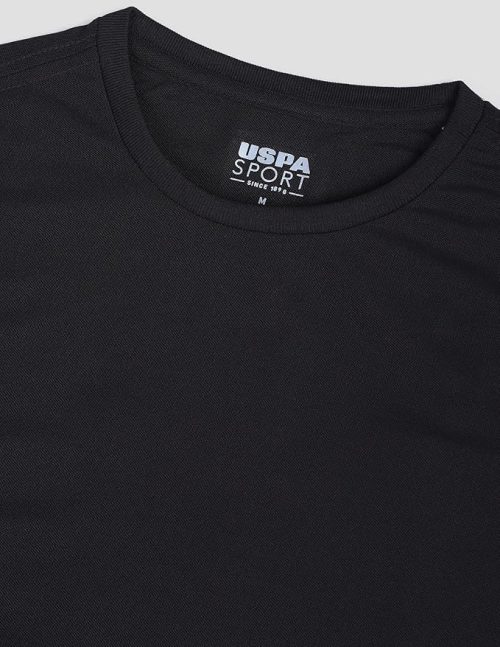
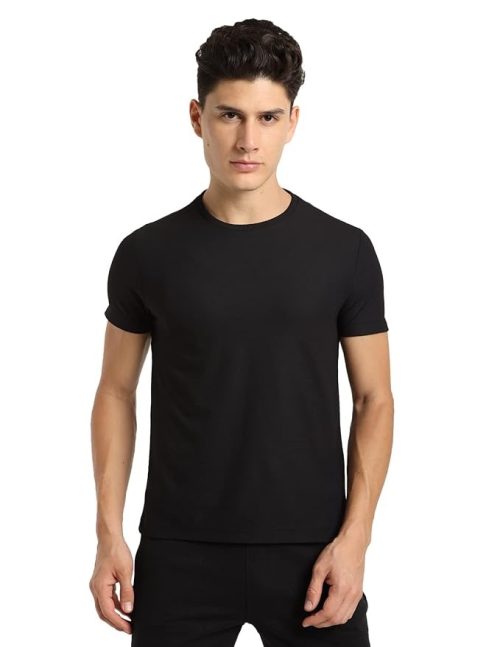
Ace weekend dressing in this black solid Polo Neck T-shirt from Allen Solly by Allen Solly.
Allen Solly Men’s Cotton Regular Fit Polo T-Shirt
Original price was: ₹1,099.00.₹659.00Current price is: ₹659.00.
Description
The Anatomy of an Icon: A Exploration of the Allen Solly Men’s Polo
Introduction: More Than Just a Shirt
In the vast universe of men’s fashion, certain items transcend their basic function as garments to become cultural touchstones, symbols of an attitude, and staples of daily life. The polo shirt is one such item. It occupies a unique sartorial space, effortlessly bridging the gap between the formality of a dress shirt and the relaxed ease of a t-shirt. This document is an exhaustive examination of one specific iteration of this classic: the Allen Solly Men’s Regular Fit, Half-Sleeve, Band Collar Polo in a 60% Cotton/40% Polyester blend, sourced from India. polo assn t shirts
Our journey will go far beyond the bullet points of a product listing. We will deconstruct this garment thread by thread, exploring the science of its fabric, the history of its design, the nuances of its manufacturing, and the psychology of its appeal. We will place it within the broader context of the global textile industry, the evolution of casualwear, and the specific brand ethos of Allen Solly. This is the story of how raw materials are transformed, through human ingenuity and industrial process, into an object of design, comfort, and identity. polo assn t shirts
Chapter 1: The Blueprint of Style – Deconstructing the Design Specs
Every great product begins with a set of design decisions. Each term in the product description is a carefully chosen keyword with a world of meaning behind it. polo assn t shirts
1.1 The Solid Pattern: The Power of Minimalism
The “Solid” pattern is a declaration of sophistication. In a world of overwhelming visual noise, a solid color offers a respite of calm and versatility. We will explore: polo assn t shirts
-
The Psychology of Color: How the chosen color (whether navy, black, olive, or pastel) influences perception, mood, and pairing options. The choice of a solid color makes the shirt a canvas for personal expression through accessories and bottoms. polo assn t shirts
-
Historical Precedence: How minimalism in menswear, from Coco Chanel’s “little black dress” to the minimalist movement of the 90s, paved the way for the dominance of solid, versatile pieces. polo assn t shirts
-
Versatility as a Design Feature: How a solid polo functions as the “workhorse” of a wardrobe, transitioning seamlessly from a day at the office (under a blazer) to a weekend brunch. polo assn t shirts
1.2 Regular Fit: The Democracy of Cut
“Regular Fit” is not an absence of design; it is an inclusive, deliberate choice. polo assn t shirts
-
Defining Regular Fit: A detailed analysis of its measurements compared to “Slim,” “Athletic,” and “Relaxed” fits. It is designed to contour the body without clinging, offering ease of movement and comfort for a wide range of body types.
-
The Target Audience: Why Regular Fit remains the most commercially popular and accessible cut, aiming for universal appeal rather than a niche, fashion-forward demographic. polo assn t shirts
-
The Silhouette: How this fit creates a classic, timeless silhouette that is not subject to the rapid whims of fashion trends. polo assn t shirts
1.3 Half Sleeve: The Practicality of Seasonality
The choice of a half sleeve is a masterstroke of practical design. polo assn t shirts
-
Climate Adaptation: Perfect for the temperate to warm climates prevalent in much of India and the world. It provides coverage and a degree of formality while allowing for breathability and comfort. polo assn t shirts
-
Functional Aesthetics: The sleeve length sits at the mid-bicep, a flattering point for most arm types. We’ll discuss the engineering of the armhole and cuff to prevent riding or constriction. polo assn t shirts
-
Historical Evolution: From the long-sleeved tennis shirts of René Lacoste to the adoption of the shorter sleeve for golf and casual wear, tracing the sleeve’s journey to its current standard length. polo assn t shirts
1.4 Band Collar (Polo Neck): The Signature Detail
The collar is the polo shirt’s most defining feature. polo assn t shirts
-
Anatomy of a Band Collar: A detailed look at its construction: the number of plies of fabric, the interfacing used for structure, the precise stitching that prevents curling, and the placement of the button(s) for optimal tension and appearance.
-
Function vs. Form: Originally designed to keep tennis players’ necks protected from. polo assn t shirts the sun and to prevent the collar from flapping, it now serves a primarily aesthetic purpose, offering a smarter alternative to a t-shirt’s ribbed neckline.
-
The “Button-Down” Element: The psychology of the button closure—it adds an element of deliberate dressing, a small ritual that elevates the act of putting on the shirt. polo assn t shirts
Chapter 2: The Alchemy of Comfort – The 60/40 Cotton-Polyester Blend
The stated material composition is the heart of the garment’s performance. This chapter delves deep into material science.
2.1 Cotton: The Natural Foundation (60%)
-
Botanical Origins: The journey of the Gossypium plant from field to yarn. The specific type of cotton likely used (e.g., Upland or Desi cotton in India) and its properties. polo assn t shirts
-
The Unmatched Qualities: A deep dive into why cotton is beloved: its exceptional breathability, soft hand-feel, moisture absorption (hygroscopy), and hypoallergenic nature.
-
The Drawbacks: Cotton’s shortcomings: it wrinkles easily, loses shape when wet (poor elasticity), and can shrink if not pre-treated.
2.2 Polyester: The Synthetic Innovator (40%)
-
Petrochemical Genesis: The science of creating polyester polymer from ethylene glycol and terephthalic acid, extruded into fine filaments.
-
The Performance Enhancer: How polyester addresses cotton’s flaws: incredible strength and durability, wrinkle resistance, shape retention, quick-drying properties, and colorfastness.
-
The Drawbacks: Polyester’s historical downsides: less breathable, can feel plasticky, and prone to static cling. How modern textile engineering has mitigated these issues. polo assn t shirts
2.3 The Synergy: Why the 60/40 Blend is a Gold Standard
This is not a mere compromise; it is a calculated synergy.
-
The Perfect Balance: The blend aims to retain 60% of cotton’s comfort and breathability while incorporating 40% of polyester’s durability and easy-care properties.
-
The Fabric’s Lifecycle: How the blend behaves during wear (moisture-wicking, comfort), during washing (resistance to shrinkage and fading), and over time (pilling resistance and long-term shape retention).
-
Comparative Analysis: How this blend stacks up against 100% cotton, 100% polyester, and other common blends like 50/50 or 80/20 in terms of feel, performance, and price point.
Chapter 3: The Maker’s Mark – Allen Solly and the “Country of Origin: India”
The brand and the place of manufacture are integral to the product’s identity and quality narrative.
3.1 Allen Solly: A Legacy of Friday Dressing
-
Brand History: Tracing Allen Solly’s roots from a British label established in 1744 to its acquisition and reinvention by Aditya Birla Group in India. How it pioneered “Friday Dressing” in the Indian corporate world, challenging formalwear norms.
-
Brand Ethos: Understanding Allen Solly’s position in the market: aspirational, contemporary, and playful yet sophisticated. How this specific polo embodies that ethos—it’s casual but polished, perfect for a “smart casual” dress code.
-
Target Consumer: A demographic and psychographic profile of the Allen Solly customer: urban, professional, value-conscious but brand-aware, seeking style without stuffiness.
3.2 “Made in India”: A Powerhouse of Textile Manufacturing
-
India’s Textile Heritage: A brief history of India’s 5000-year-old relationship with textile production, from ancient dyes to the Mughal era’s intricate weaves.
-
The Modern Industry: India’s position today as one of the world’s largest producers of cotton and a global manufacturing hub. The scale, skill, and infrastructure that make “Made in India” a mark of quality and competitive pricing.
-
The Supply Chain: Mapping the journey of this polo shirt within India: from cotton farms in Gujarat or Maharashtra and polyester production in industrial plants, to spinning, knitting, dyeing, and finally, cutting and sewing in specialized garment units, likely in hubs like Tiruppur or Bangalore.
Chapter 4: The Art of Creation – From Fiber to Finished Product
A step-by-step walkthrough of the manufacturing process, illustrating the complexity behind this “simple” shirt.
4.1 Spinning and Knitting: Transforming fibers into fabric.
4.2 Dyeing and Finishing: Imbuing the fabric with color and specific performance characteristics.
4.3 Cutting: Using automated spreaders and CAD-cutters to minimize waste.
4.4 Sewing: The intricate process of assembling over a dozen fabric pieces with various stitch types (overlock, flatlock, coverstitch).
4.5 Quality Control, Washing, and Packaging: The final steps before the shirt reaches the consumer.
Chapter 5: The Philosophy of Use – Occasion, Styling, and Sustainability
5.1 The “Casual” Occasion Defined: Deconstructing what “casual” means in modern dress codes.
5.2 Endless Styling Options: A visual and descriptive guide on how to wear this polo with chinos, jeans, shorts, under blazers, and with various footwear.
5.3 Care and Longevity: Detailed instructions on washing, drying, and ironing to preserve the garment’s life, directly tied to its material properties.
5.4 The Sustainability Question: An honest discussion of the environmental footprint of a cotton-polyester garment, including water usage, pesticides, microplastics, and recyclability. How consumers and brands like Allen Solly can make more responsible choices.
Conclusion: The Sum of Its Parts
The Allen Solly Men’s Polo is far more than the sum of its specifications. It is a testament to centuries of textile evolution, decades of brand building, and intricate global supply chains. It represents a perfect meeting point of comfort and style, natural and synthetic, tradition and innovation. It is a designed object, an economic product, and a cultural artifact. Understanding the depth behind each choice—from the 60/40 blend to the band collar—enriches not only our appreciation for the garment itself but for the vast, interconnected world of design and manufacturing that brings it to our wardrobe. It is, in its essence, a modern icon.
Open any modern man’s closet, and you will likely find it. It hangs between the formality of the dress shirt and the informality of the graphic tee. It is the polo shirt—a sartorial chameleon, a democratic garment, a universal constant in global fashion. This document is an epic biography of one specific incarnation of this icon: the Allen Solly Men’s Regular Fit, Half-Sleeve, Band Collar Polo, crafted from a 60% Cotton/40% Polyester blend and born in the textile mills and factories of India.
Our mission is to dissect, analyze, and celebrate this object in its entirety. We will embark on a journey that follows its constituent atoms from the agricultural field and the petroleum refinery to the spinning mill, the dyeing vat, the sewing machine, and finally, onto the human body. We will explore the physics of its comfort, the sociology of its branding, the economics of its global journey, and the environmental implications of its existence. This is not merely a product description; it is an odyssey into the very fabric of modern life.
VOLUME I: THE DNA OF DESIGN – Decoding the Product Lexicon
Every word in the technical specification is a universe of deliberate choice, historical evolution, and cultural meaning.
1.1 The Theology of Solid: Why ‘Nothing’ Says Everything
The “Solid” pattern is the ultimate exercise in reductionism, a canvas of intentional emptiness.
-
A History of Silence: Tracing the aesthetic power of the solid color from the monastic robes of medieval Europe (where color denoted order and rank) to the minimalist art movement of the 1960s (Barnett Newman’s “zip” paintings, Mark Rothko’s color fields). The solid polo is a wearable piece of this philosophy, rejecting noise in favor of essence.
-
The Chromatic Spectrum: A detailed analysis of the likely color palette for this garment. Navy Blue:The anchor of any wardrobe, conveying trust, stability, and authority. Psychologically, it is the most universally flattering and accepted color. Black: The quintessence of urban cool and sophistication, but with a higher heat absorption property (a scientific consideration). Olive Green: A connection to utility and military heritage, offering a complex, earthy alternative to neutrals. White: Purity and luxury, but a high-maintenance choice due to its susceptibility to staining. Pastels (Pink, Mint, Lilac):A nod to the “Play” in Allen Solly’s DNA, representing a modern, confident masculinity that is unafraid of color.
-
The Versatility Algorithm: How a solid color operates on a mathematical level within a wardrobe. If a man owns 5 solid polos in different colors and 3 pairs of bottoms (chinos, jeans, shorts), he has instantly created 15 distinct outfits, not accounting for layers like blazers or jackets. This exponential styling potential is the core of its value proposition.
1.2 The Geometry of the Body: The “Regular Fit” Explained
“Regular Fit” is a masterclass in inclusive, biomechanically sound design.
-
Anthropometric Precision: “Regular Fit” is not a single measurement but a range based on extensive data of male body types. It is designed with a specific ease—the extra inches added to the body’s measurements for movement and comfort. We would break down the pattern: a chest measurement likely allowing for 4-6 inches of ease, a waist with 5-7 inches, and a straight, non-tapered hem. This creates a rectangular or slight trapezoid silhouette. polo assn t shirts
-
The Democratic Ideal: Unlike a “Slim Fit,” which caters to a specific V-shaped torso, or a “Relaxed Fit,” which can appear sloppy, the “Regular Fit” is the sartorial equivalent of the political center. It aims to please the largest possible demographic without extreme statements. It flatters by not clinging, and it comforts by not constricting. polo assn t shirts
-
A Cultural History of Fit: How the prevailing fit of men’s clothing has oscillated throughout history—from the draped robes of antiquity to the corseted silhouettes of the European court, to the baggy jeans of the 90s. The modern “Regular Fit” represents a pragmatic, post-2000s consensus. polo assn t shirts
1.3 The Architecture of the Sleeve: A Half-Length Masterpiece
The half-sleeve is a study in functional elegance.
-
Biomechanics of the Bicep: The sleeve is engineered to end at the widest part of the bicep. This is a flattering point that makes the arm appear more muscular and defined. The armhole is cut to allow for a full range of motion—raising arms overhead, swinging a golf club—without the entire shirt riding up. The cuff is often finished with a double-stitched hem or a banded tape to maintain its shape and lie flat against the arm.
-
Thermoregulation: The half-sleeve is the perfect adaptation to a climate zone of 20-30°C (68-86°F). It protects the shoulders from sunburn while leaving the forearms free for heat dissipation. It is a garment for the “shoulder season” and for indoor/outdoor transitions.
1.4 The Crown: The Band Collar’s Reign
The collar is the polo’s crown, its most defining and complex feature.
-
Deconstructing the Plies: A high-quality band collar is a sandwich of structure. The outer shell is the main 60/40 fabric. Inside, a layer of non-fusible woven interfacing (likely a polyester-cotton blend itself) is basted in. This provides body and prevents curling without the stiffness of fusible glue. The inside is lined with a second ply of the main fabric, hiding all the seams for a clean finish. This three-to-four-ply construction is what gives a good collar its roll and heft.
-
The Button and Placket: The placket—the strip of fabric with the buttonhole—is often reinforced with a hidden piece of tape to prevent stretching. The button itself is typically a plastic shank button or a dyeable coconut button. The placement is crucial: too high and it chokes; too low and it looks sloppy. The optimal placement creates a slight “V” shape, framing the face.
-
From Function to Icon: René Lacoste’s original design featured a long-sleeved, button-down collar shirt made of petit piqué cotton to aid mobility and comfort on the tennis court. The transformation into the modern band collar by brands like Polo Ralph Lauren represents the evolution from pure sportswear to a symbol of casual luxury.
VOLUME II: THE ALCHEMY OF TEXTILES – The 60/40 Cotton-Polyester Blend
This chapter is a deep dive into material science, a story of two fibers and their marriage.
2.1 King Cotton: The Biological Fiber
-
From Seed to Bale: A detailed biological journey. The Gossypium hirsutum (Upland cotton) plant is cultivated. After ginning, the lint (the long, valuable fibers) is separated from the linters and seeds. The lint is then graded on its staple length (longer is better), micronaire (fineness), and strength. Indian cotton, like the popular *Shankar-6* variety, is known for its good staple length and reliability. polo assn t shirts
-
The Polymer of Glucose: At a molecular level, cotton is almost pure cellulose, a natural polymer (C₆H₁₀O₅)ₙ. The molecules form chains that are highly organized (crystalline regions) and disorganized (amorphous regions). The hydroxyl groups (-OH) in these chains are what make cotton hydrophilic—they form hydrogen bonds with water molecules, leading to excellent absorbency (can absorb up to 25% of its weight in moisture without feeling damp). polo assn t shirts
-
The Drawbacks: These same hydroxyl groups are the reason cotton wrinkles. When the chains in the amorphous regions shift and form new hydrogen bonds with each other, a crease is set. Furthermore, cotton has low elastic recovery, meaning it stretches easily but does not spring back well, leading to bagging. polo assn t shirts
2.2 Polyester: The Engineered Fiber
-
The Chemistry of Synthesis: Polyester (Polyethylene Terephthalate, or PET) is born from a reaction between purified terephthalic acid (PTA) and monoethylene glycol (MEG), derived from crude oil and natural gas. This creates a polymer melt that is forced through a spinneret (a showerhead-like device) to form continuous filaments. These filaments are drawn (stretched) to align the polymer chains, increasing their strength and crystallinity. polo assn t shirts
-
The Hydrophobic Wonder: The polyester molecule lacks hydrophilic groups. It is hydrophobic—it repels water. This is why it wicks moisture (pushes it to the surface for evaporation) and dries quickly. Its polymer chains are strong and resistant to movement, giving it high tenacity (strength) and excellent elastic recovery, meaning it resists wrinkling and holds its shape. polo assn t shirts
-
The Microplastic Problem: This is the fiber’s greatest flaw. Every wash of a polyester garment releases thousands of microfibers—tiny plastic fragments—into the water system, which enter the food chain. This is an environmental challenge the entire industry is grappling with. polo assn t shirts
2.3 The Synergistic Marriage: Why 60/40 is a Masterpiece of Engineering
The blend is not a compromise; it is an optimization. polo assn t shirts
-
The Hand-Feel: The 60% cotton dominates the surface feel, giving the shirt the soft, familiar, non-synthetic hand that consumers prefer against their skin. polo assn t shirts
-
Performance Engine: The 40% polyester provides the structural integrity. It drastically reduces wrinkling, minimizes shrinkage to under 2-3%, and gives the garment “body” and drape. It locks the cotton fibers in place, reducing pilling and drastically improving color retention wash after wash. polo assn t shirts
-
The Economic Equation: Cotton is subject to commodity price fluctuations based on harvests. Polyester’s price is tied to oil. The 60/40 blend also creates a price point that is accessible yet profitable, hitting the mass-premium market that Allen Solly targets. polo assn t shirts


Reviews
There are no reviews yet.