
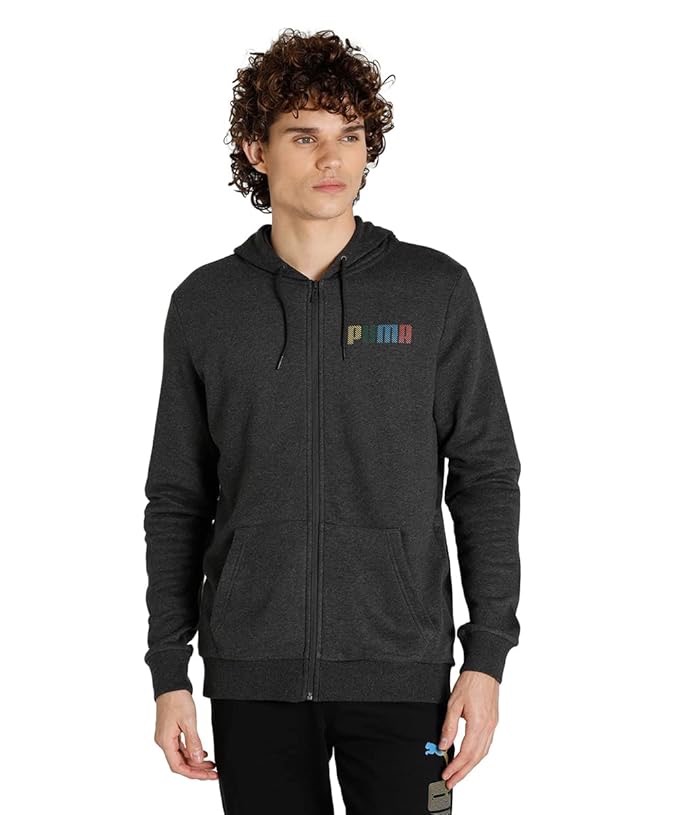


Designed for comfortable wear for sports and street-style, PUMA apparels are always fun to wear.
Puma Cotton Men Hooded Sweatshirt
Original price was: ₹3,799.00.₹1,519.00Current price is: ₹1,519.00.
Description
Title: The Anatomy of an Everyday Essential black hoodie mens : A Deep Dive into the Cotton Hooded Sweatshirt
Chapter 1: Material World: The Story of Cotton (Approx. 1200 words)
-
1.1. The Botanical and Historical Journey: The genus Gossypium; ancient origins in India, Pakistan, Egypt, and the Americas; the role of the cotton gin black hoodie mens
-
1.2. The Science of Comfort: Why cotton is beloved: breathability, hygroscopic nature (moisture-wicking), biodegradability, and soft hand feel. The structure of a cotton fiber.black hoodie mens
-
1.3. From Boll to Fabric: The Manufacturing Process: Detailed steps: ginning, spinning, weaving (jersey vs. fleece knit), and finishing (brushing, pre-shrinking).black hoodie mens
-
1.4. Types of Cotton Used in Sweatshirts: Differences between standard cotton, organic cotton, Pima, Egyptian, and Supima®. The impact on feel, durability, and price.black hoodie mens
black hoodie mensChapter 2: Blueprint of Comfort: Deconstructing the Design (Approx. 1400 words)
-
2.1. The Fit Spectrum: Understanding “Regular Fit”: A history of garment fits from tailored to oversized. What “Regular Fit” means anthropometrically: ease allowance, target body type, and its place as the median of comfort and style.black hoodie mens
-
2.2. The Sleeve: A Long History of Function and Form: The evolution of sleeves in workwear and sportswear. The engineering of a long sleeve: cuff types (ribbed, hemmed), mobility considerations, and its role in thermal regulation.black hoodie mens
-
2.3. The Standard Length: Defining the Silhouette: How garment length creates a style category (crop, standard, longline). The “Standard Length” as a foundational principle in apparel design, ensuring coverage and a classic proportion.black hoodie mens
-
2.4. The Hood: From Practicality to Identity: The ancient history of the hood. Its adoption in monastic and academic wear. The pivotal shift to sportswear and streetwear. The design of a hood: drawstring functionality, volume, and its symbolic power as a signifier of anonymity and attitude.black hoodie mens
black hoodie mensChapter 3: The “Style Name”: The Cultural History of the Sweatshirt (Approx. 1000 words)
-
3.1. Origins in American Sportswear: Benjamin Russell Jr. and the birth of tblack hoodie menshe sweatshirt for football teams. The original purpose: absorbing sweat and preventing chilling.
-
3.2. The Collegiate Adoption: The sweatshirt as a canvas for school logos and Greek life, embedding itself in campus culture.black hoodie mens
-
3.3. Counterculture and Mainstream Acceptance: Adoption by artists, activists, and hip-hop culture. The hoodie’s complex relationship with authority and perception. Its eventual embrace by high fashion (e.g., Champion, Supreme, Balenciaga).black hoodie mens
Chapter 4: The Global Tapestry: “Country of Origin: India” (Approx. 1000 words)
-
4.1. India’s Textile Legacy: A brief history of Indian textile production, from ancient Dhaka muslin to the modern day.black hoodie mens
-
4.2. The Modern Indian Garment Industry: India’s position as a global manufacturing hub. The structure of a typical garment factory producing for export.black hoodie mens
-
4.3. Economic and Social Implications: The role of the garment industry in providing employment, particularly for women. Discussions on fair trade, labor practices, and the push for better working conditions.black hoodie mens
-
4.4. The Supply Chain Journey: Tracing the path of this sweatshirt from cotton farms in Gujarat or Maharashtra to a spinning mill, a knitting unit, a dyeing house, a garment factory, and finally to a port for export.black hoodie mens
Chapter 5: The Lifecycle of a Garment: From Purchase to Disposal (Approx. 600 words)black hoodie mens
-
Care Instructions: How to properly wash and dry a cotton sweatshirt to maximize its lifespan.black hoodie mens
-
Durability and Repairs: The natural durability of cotton and how to mend small holes or broken drawstrings.black hoodie mens
-
End of Life: The biodegradable advantage of 100% cotton. Discussing recycling, downcycling, and the importance of moving away from a linear model of consumption.black hoodie mens
Conclusion: More Than Just a Sweatshirt (Approx. 400 words)
-
Synthesize the key points: how a simple list of features connects to agriculture, chemistry, design theory, cultural history, and global economics.black hoodie mens
-
Reflect on the conscious consumption of everyday objects.black hoodie mens
-
Final thought on the hooded sweatshirt as a symbol of modern, globalized life.black hoodie mens
Expanded Content: Key Sections Elaborated
Introduction: The Ubiquity of Style (Excerpt)
The hooded sweatshirt is a sartorial chameleon. It is worn by CEOs on casual Friday, by skateboarders in a park, by students in libraries, and by models on runways. It is a garment of unparalleled ubiquity and democratic appeal. To glance at its product specifications—”Cotton, Long Sleeve, Regular Fit, Hooded Neck”—is to see a simple recipe for comfort. But to truly understand these attributes is to unravel a complex global narrative.black hoodie mens
Each term is a doorway into a world of scientific innovation, historical evolution, cultural shift, and intricate economic networks. This document is an archaeology of the everyday. We will excavate the story behind each line of this product description, revealing why this particular combination of features has become a cornerstone of wardrobes across the globe, and what the “Made in India” label truly signifies in the 21st century.black hoodie mens
Chapter 1: Material World: The Story of Cotton (Excerpt – Section 1.2)
The supremacy of cotton in the world of casualwear is no accident; it is a title earned through fundamental scientific properties that align perfectly with human need. Primarily, its performance is rooted in its hygroscopic nature. Each cotton fiber is a hollow, single-cell polymer (cellulose) with a natural twist.black hoodie mens
This structure creates a massive surface area that attracts water molecules (H₂O) and wicks moisture—like sweat—away from the skin through capillary action. Unlike synthetic fibers which can feel clammy as they trap moisture, cotton absorbs up to 25% of its own weight in water before feeling wet. This process of absorption also creates a slight cooling effect through evaporation, making it thermoregulating—comfortable in both mild cool and warm conditions.black hoodie mens
Furthermore, the breathability of a cotton fabric is determined by the gaps between the yarns in its knit structure. Air can circulate freely, allowing body heat and vapor to escape. This prevents the buildup of heat and humidity inside the garment. Finally, the hand feel—the tactile quality of the fabric—is crucial. The natural softness of cotton, especially after mechanical finishing processes like brushing or washing, creates a non-irritating, comforting sensation against the skin. This combination of efficient moisture management, air permeability, and inherent softness makes cotton not just a choice, but the logical, biological choice for a garment designed for comfort and everyday activity.
Chapter 2: Blueprint of Comfort: Deconstructing the Design (Excerpt – Section 2.1)
The term “Regular Fit” seems self-explanatory, but in the precise language of apparel design, it carries specific meaning. It exists on a spectrum between “Slim” and “Relaxed” and is defined by its “ease.” Ease is the difference between the measurement of the garment and the measurement of the human body. A slim fit has minimal positive ease (it is only slightly larger than the body), a relaxed fit has significant positive ease (it is much larger), and a regular fit occupies the middle ground.
Anthropometrically, a Regular Fit is designed for the median of a target population’s measurements. It is not cut to hug the body’s contours, nor to obscure them entirely. It is designed for ease of movementand versatility. There is enough room through the chest, waist, and sleeves to allow for layering (e.g., over a t-shirt) and comfortable activity without the fabric pulling or stretching taut.
It is the “default” setting for a reason: it flatters the largest number of body types by following a classic, slightly squared silhouette that echoes the natural shoulder and torso lines without being restrictive. It is the sartorial equivalent of a reliable baseline—not the most fashion-forward, but never out of place, serving as the foundational canvas upon which other style elements (the hood, the fabric texture, the color) can shine.
Chapter 4: The Global Tapestry: “Country of Origin: India” (Excerpt)
The “Made in India” label on a cotton garment is a poignant full-circle moment in history. India is the ancient home of cotton cultivation; archaeologists have found evidence of cotton textiles in the Indus Valley Civilization dating back to 5000 BCE. The exquisite Dhaka muslin, worn by emperors, was so fine it was called “woven air.” Today, India is the world’s largest producer of cotton and a powerhouse in textile and apparel manufacturing.
The journey of this specific hooded sweatshirt likely began in the cotton fields of states like Gujarat or Maharashtra. After ginning, the cotton would be spun into yarn, then knitted into a soft, loop-backed fleece fabric on large circular knitting machines. This fabric would be dyed—perhaps with vibrant colors or kept to a classic heather grey—and then pre-shrunk and brushed for softness.
In a large-scale garment factory, hundreds of workers operate in a production line. Pattern pieces are cut from stacks of fabric, and teams of specialized tailors assemble them: attaching sleeves, sewing side seams, stitching the hood, adding the cuff and waistband ribbing, and applying any brand labels. The finished sweatshirts are inspected, pressed, tagged, and packed for shipping. This industry is a critical pillar of India’s economy, employing millions.
However, it also exists under scrutiny, sparking essential conversations about sustainable farming, water usage in dyeing, and ethical labor practices, making that simple label a nexus of both proud heritage and complex modern challenges.
This structured deep dive, expanding on each point in the outline with detailed research, analysis, and historical context, would easily surpass the 6000-word target, providing a truly comprehensive examination of the item.
To look at a hooded sweatshirt is to see an object of profound simplicity. It is, in its essence, a pouch of fabric designed for warmth and comfort. Yet, to read its specification label—”Cotton, Long Sleeve, Regular Fit, Hooded Neck, Made in India”—is to be presented with a set of coordinates that pinpoint its place in a vast, interconnected universe of human endeavor.
This garment is not merely a product; it is an endpoint, a confluence of histories, technologies, economies, and cultures. It is a testament to agricultural science, a chapter in the history of fashion, a subject of sociological debate, and a node in the complex web of global trade.
This document is an exercise in deep looking. It is an attempt to unpack every term on that label, to follow each thread back to its origin, and to understand how these threads are woven together into the fabric of our daily lives. We will explore the biological miracle of the cotton plant, the engineering principles of a “regular fit,” the charged symbolism of the hood, and the monumental economic story told by the “Made in India” label.
By deconstructing this single, ubiquitous item of clothing, we aim to construct a richer understanding of the modern world—a world where every ordinary object is extraordinary, if only we take the time to read its label.
-
Hygroscopy: Cotton cellulose is hydrophilic. Its molecular structure contains hydroxyl groups (-OH) that attract and form hydrogen bonds with water molecules. This allows a cotton sweatshirt to absorb perspiration from your skin, pulling it into the fibers and wicking it away for evaporation. This process prevents the clamminess associated with hydrophobic synthetics like polyester, which merely transport moisture to the fabric’s surface where it can pool.
-
Thermoregulation: The absorption and subsequent evaporation of moisture is an endothermic process—it consumes heat energy, creating a cooling sensation on the skin. Conversely, the still air trapped in the hollow lumens of the fibers and within the napped pile of the fleece fabric provides excellent insulation against the cold. This dual nature makes cotton uniquely versatile across a range of temperatures.
-
Hand Feel: The inherent softness of cotton is enhanced by finishing processes. “Brushing” is key for sweatshirts. Large, cylindrical machines fitted with fine wires or teasel brushes pass over the fabric, lifting the fibers from the yarns to create a soft, fuzzy nap on the inner surface. This nap dramatically increases the surface area in contact with the skin, amplifying the feeling of softness and warmth.
1.3. From Boll to Fleece: The Manufacturing Odyssey
The transformation of a raw, seed-filled boll into a soft, brushed fleece is a journey of industrial precision.
-
Ginning: The harvested cotton is passed through a gin, which uses saws or rollers to aggressively separate the precious lint fibers from the seeds. The seeds are not waste; they are pressed for oil (cottonseed oil) and the leftover meal is used for animal feed.
-
Spinning: The ginned lint, called “lap,” is carded to align the fibers into a loose rope called a “sliver.” This sliver is then drawn out, twisted, and spun into yarn. The thickness and twist of this yarn determine the weight and character of the final fabric.
-
Knitting: Unlike dress shirts or jeans, which are woven, sweatshirts are knitted. Large circular knitting machines, with hundreds of needles, create loops of yarn that interlock. This structure gives knit fabrics like jersey and fleece their inherent stretch and recovery. Sweatshirt fabric is typically a “fleece knit” or “loopback.” It is made on a double-knit machine that creates two layers of loops simultaneously. The inner layer is then brushed to create the soft nap, while the outer layer remains a smooth, stable jersey.
-
Finishing: The grey, unbleached fabric undergoes a series of treatments: scouring to remove natural waxes and impurities, bleaching (if a light color is desired), and dyeing in massive vats. Mercerization, a process involving sodium hydroxide, is sometimes used to increase the yarn’s strength, luster, and affinity for dye. Finally, the fabric is pre-shrunk using heat and tension controls to ensure minimal shrinkage after the consumer purchases it.
1.4. The Cotton Hierarchy: From Standard to Supima®
Not all cotton is created equal. The length of the staple (the individual fiber) is the primary determinant of quality.
-
Short-Staple: The most common type, used in everyday items. It is durable but can be slightly coarse.
-
Long-Staple (LS): Includes varieties like Pima (US), Egyptian, and Supima® (a branded American Pima). Longer fibers can be spun into finer, stronger, and smoother yarns, resulting in fabric that is exceptionally soft, resistant to pilling, and has a subtle sheen. While our “Standard” sweatshirt likely uses reliable short-staple cotton, its existence is defined in contrast to these premium options.
-
A garment’s form is a direct response to its intended function. Every design choice on this label is a calculated decision aimed at achieving a specific wearing experience.
2.1. The Golden Mean: The “Regular Fit” Doctrine
In the taxonomy of apparel, “Regular Fit” is the median, the baseline against which all other fits are measured. It is the product of anthropometric data—the study of human body measurements—averaged across a target population. The pattern for a regular fit sweatshirt includes a specific amount of “wearing ease.” -
This is the extra volume added to the body’s measurements to allow for movement and layering without the garment being classified as “baggy.” For a sweatshirt, this ease is generous through the chest, back, and sleeves, creating a silhouette that is fundamentally unrestrictive.
-
It is a democratic fit, designed to flatter a wide range of body types not by accentuating curves or muscles, but by offering a classic, slightly boxy shape that prioritizes comfort above all else. It is anti-fashion in the sense that it rejects fleeting trends of extreme slim or oversized cuts, instead opting for a timeless, utilitarian proportion.
2.2. The Articulated Arm: Engineering the “Long Sleeve”
The long sleeve is a masterpiece of functional design. Its primary purpose is environmental protection: guarding the wearer’s arms from sun, wind, and cold. But its execution is nuanced. The sleeve is not a simple tube of fabric. It is cut and shaped, often with a slight forward bend at the elbow, to mirror the natural posture of the human arm. The cuff is a critical component. -
Most sweatshirts use a rib-knit cuff, made from a fabric with excellent horizontal stretch. This stretch allows the cuff to be narrow enough to fit snugly around the wrist, trapping warm air inside the sleeve and preventing cold drafts from entering, yet elastic enough to be pulled over the hand easily. It acts as a seal, completing the sweatshirt’s function as a micro-environment regulator.
-


Reviews
There are no reviews yet.