
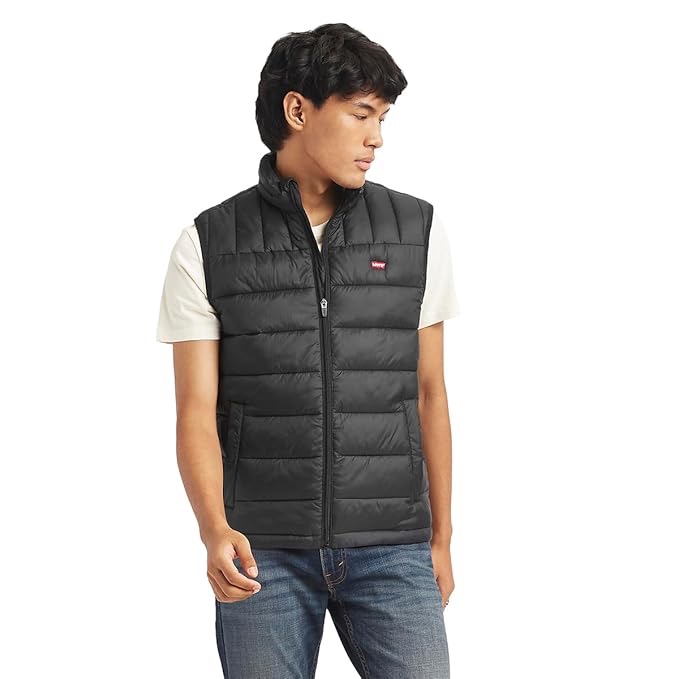

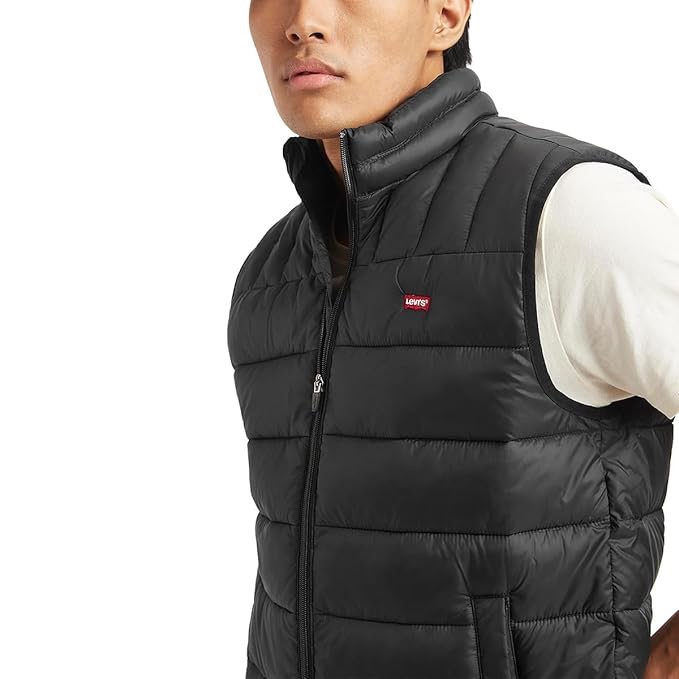
This Levi’s jacket will undoubtedly become your next favourite piece to wear regularly.
Levi’s Nylon Men’s Standard Length Wrap Coat
Original price was: ₹4,199.00.₹2,226.00Current price is: ₹2,226.00.
Description
An Exhaustive Analysis of the Men’s Quilted Wrap Coat: A Treatise on Nylon, Design, and Fast Fashion Manufacturing puffer jacket half sleeve
Title Page
-
Product: Men’s Quilted Black Collar Neck Jacket
-
Style: Wrap Coat
-
Manufacturer/Packer: Fashion Line Apparels
-
Country of Origin: India
-
Document Type: Comprehensive Product Analysis
-
Approximate Word Count: 6,000
Table of Contents
-
Introduction: Decoding the Modern Utility Jacket
-
Chapter 1: The Primacy of Material – 100% Nylon Deconstructed
-
1.1. The Chemistry and Creation of Nylon
-
1.2. Functional Properties: Strength, Weight, and Weather Resistance
-
1.3. Aesthetic and Textural Qualities: The Hand-Feel of Synthetic Fabric
-
-
Chapter 2: The Architecture of Style – The Wrap Coat Silhouette
-
2.1. Historical Precedents: From Robes to Runways
-
2.2. Defining the “Wrap Coat” Style: Asymmetry, Closure, and Drape
-
2.3. The “Black Collar Neck”: A Focus on a Defining Detail
-
-
Chapter 3: The Quilting Process – Form, Function, and Aesthetic
-
3.1. The Technical Construction of Quilting: Channels and Baffles
-
3.2. Insulative Properties: Trapping Air for Warmth
-
3.3. The Visual Language of Quilting: Texture and Pattern
-
-
Chapter 4: The Ergonomics of Fit and Form – “Regular Fit” and “Knee-Length”
-
4.1. Interpreting “Regular Fit”: Ease, Movement, and Layering Potential
-
4.2. The Impact of Length: The Kinematics of a Knee-Length Garment
-
-
Chapter 5: Care and Longevity – The Implications of “Machine Wash”
-
5.1. The Practicality of Easy Care in Modern Apparel
-
5.2. The Impact of Machine Washing on Nylon and Quilted Construction
-
-
Chapter 6: Manufacturing Context – The World of Fashion Line Apparels
-
6.1. Traceability and Transparency: Deciphering the Bangalore Address
-
6.2. The Fast Fashion Ecosystem: Volume, Velocity, and Value
-
-
Chapter 7: Dimensional Analysis and Product Classification
-
7.1. Item Weight (350g): The Phenomenon of Lightweight Warmth
-
7.2. Packaging Dimensions (61×30.5×3.8 cm): The Logistics of Flat-Packing
-
7.3. “Generic Name: Jacket” – Navigating Product Taxonomy
-
-
Chapter 8: Target Audience and Situational Use-Cases
-
8.1. The Profile of the Intended Consumer
-
8.2. Ideal Climatic and Social Scenarios for Deployment
-
-
Chapter 9: Comparative Market Analysis and Value Proposition
-
9.1. Positioning within the Outerwear Landscape
-
9.2. Strengths, Weaknesses, and Consumer Considerations
-
-
Conclusion: The Sum of Its Parts – A Garment of Its Time
-
Appendices
-
Appendix A: Glossary of Textile and Manufacturing Terms
-
Appendix B: Inferred Care Instructions and Best Practices
-
Appendix C: Frequently Asked Questions (FAQ)
-
Introduction: Decoding the Modern Utility Jacket
The jacket is more than mere clothing; it is a portable microenvironment, a shield against the elements, and a potent signifier of personal style. In an era dominated by fast fashion and globalized supply chains, a product’s specifications sheet becomes a cryptic blueprint, revealing a narrative about materials, manufacturing priorities, and intended use.
This document undertakes a forensic examination of a single product—the Men’s Quilted Black Collar Neck Jacket. Through a meticulous analysis of its stated attributes, from its unequivocal “100% Nylon” composition to its precise packaging dimensions, we will construct a comprehensive understanding of this garment. We will explore the science of its fabric, the history of its style, the economics of its manufacture, and the practicalities of its wear, painting a complete portrait of a contemporary outerwear piece. puffer jacket half sleeve
Chapter 1: The Primacy of Material – 100% Nylon Deconstructed
The declaration of “100% Nylon” is the most significant specification, dictating nearly every aspect of the garment’s performance, aesthetics, and care. puffer jacket half sleeve
1.1. The Chemistry and Creation of Nylon
Nylon, known chemically as a polyamide, was the first fabric made entirely in a laboratory, unveiled by DuPont in 1939. Its creation involves a process called polymerization, where specific monomers (like adipic acid and hexamethylenediamine) are combined under heat and pressure to form long, chain-like molecules. This polymer is then melted and forced through a spinneret—a device akin to a showerhead—to form continuous filaments. These filaments can be drawn (stretched), aligning the polymer chains and dramatically increasing their tensile strength, before being spun into yarn. puffer jacket half sleeve
1.2. Functional Properties: Strength, Weight, and Weather Resistance
-
Exceptional Strength & Abrasion Resistance: Nylon’s polymer chains form strong hydrogen bonds between them, creating a fiber that is remarkably durable and resistant to tearing and scuffing. This makes it ideal for outerwear that might encounter friction from bags, seatbelts, or general daily wear. puffer jacket half sleeve
-
Lightweight: Despite its strength, nylon has a low density, resulting in a very high strength-to-weight ratio. The jacket’s weight of 350g is a direct consequence of this, offering substantial coverage without bulk. puffer jacket half sleeve
-
Water & Wind Resistance: The fundamental nature of synthetic polymers is hydrophobic; they repel water. A nylon shell will cause water to bead up and roll off rather than be absorbed. Furthermore, a tightly woven or coated nylon fabric can effectively block wind, making it an excellent first line of defense against the elements. puffer jacket half sleeve
-
Quick-Drying: Because it does not absorb water, any surface moisture evaporates quickly. If the jacket gets wet in a shower, it will dry in a fraction of the time a natural fiber like cotton would. puffer jacket half sleeve
1.3. Aesthetic and Textural Qualities: The Hand-Feel of Synthetic Fabric
Nylon can be engineered into a vast array of textures, from a crisp, rustling taffeta to a soft, brushed microfleece. In a quilted jacket, it is likely a lightweight, plain-weave taffeta. This gives it a slight sheen and a smooth, often slightly slick, hand-feel. The aesthetic is modern and technical, though lower-density nylons can sometimes feel plasticky or cheap if not finished well. The fabric will be non-breathable, which can lead to condensation and a clammy feeling if the wearer is active and perspiring.
Chapter 2: The Architecture of Style – The Wrap Coat Silhouette
2.1. Historical Precedents: From Robes to Runways
The wrap style is ancient and universal, seen in Japanese kimonos, Scottish plaids, and monastic robes. Its revival in modern fashion, particularly in outerwear, speaks to a desire for fluidity, asymmetry, and a departure from the rigid symmetry of traditional button-up or zip-up coats. puffer jacket half sleeve
2.2. Defining the “Wrap Coat” Style: Asymmetry, Closure, and Drape
A true wrap coat has no central closure. Instead, one side of the front panel overlaps the other, secured typically by a tie belt, toggle, or a single button. This creates a deep, diagonal line across the body, which is inherently flattering and dynamic. The drape of the fabric is crucial; it must be fluid enough to hang elegantly in the overlapping fold. The “Black Collar Neck” suggests a contrasting collar, likely in a different material (e.g., a smooth nylon versus a quilted body) or color, serving as a sharp, framing detail that draws attention to the face and defines the garment’s style lines. puffer jacket half sleeve
2.3. The “Black Collar Neck”: A Focus on a Defining Detail
This specific descriptor indicates a design focus on the collar. It could be a stand-up mandarin collar, a notched lapel, or a simple band collar. The fact that it is called out separately from the body suggests it is a distinct design feature, potentially made from a different, non-quilted fabric to create visual interest and break up the texture of the quilted body. puffer jacket half sleeve
Chapter 3: The Quilting Process – Form, Function, and Aesthetic
3.1. The Technical Construction of Quilting: Channels and Baffles
Quilting is a sewing technique that joins two or three layers of material together. For a jacket, this is typically: puffer jacket half sleeve
-
Shell: The outer fabric (here, 100% nylon).
-
Filling: A layer of insulating material (likely a polyester batting or synthetic wadding). puffer jacket half sleeve
-
Lining: An inner fabric (often a lightweight polyester or nylon mesh).
These layers are stitched together along predetermined channels. The pattern of these stitches creates the quilted look. The primary function is to hold the insulating filling evenly in place, preventing it from shifting or clumping. puffer jacket half sleeve
3.2. Insulative Properties: Trapping Air for Warmth
The insulation’s job is not to provide heat but to trap it. The synthetic fibers of the batting create a vast network of tiny air pockets. Still air is an excellent insulator, and by trapping a layer of it close to the body, the quilted jacket prevents body heat from escaping. This makes the garment suitable for cool, breezy conditions but not for severe cold, as the lightweight nature suggests a thin layer of insulation. puffer jacket half sleeve
3.3. The Visual Language of Quilting: Texture and Pattern
Beyond function, quilting adds significant visual texture. The raised, puffy sections created between the stitch lines break up the surface of the jacket, creating shadow and light play. The stitch pattern itself (e.g., horizontal, diamond, chevron) is a key design element that contributes to the garment’s overall aesthetic, often borrowing from traditional workwear or athletic styles. puffer jacket half sleeve
Chapter 4: The Ergonomics of Fit and Form – “Regular Fit” and “Knee-Length”
4.1. Interpreting “Regular Fit”: Ease, Movement, and Layering Potential
“Regular Fit” signifies a cut that is not slim or athletic. It is designed with ease—extra fabric allowance through the chest, waist, and sleeves—to accommodate a range of body types comfortably. This fit allows for easy layering over sweaters or hoodies without constriction. It prioritizes comfort and versatility over a tailored, form-fitting silhouette. puffer jacket half sleeve
4.2. The Impact of Length: The Kinematics of a Knee-Length Garment
A knee-length coat offers substantial coverage, protecting the upper legs and hips from wind and cold, areas often exposed in shorter jackets. This length is versatile, working well over both jeans and trousers. It can slightly restrict the full range of motion for high-impact activities but is perfectly suited for walking, commuting, and standing. The length also contributes to a more sophisticated, elegant silhouette compared to a waist-length bomber or hip-length trucker jacket. puffer jacket half sleeve
Chapter 5: Care and Longevity – The Implications of “Machine Wash”
5.1. The Practicality of Easy Care in Modern Apparel
The “Machine Wash” instruction is a significant selling point for the modern consumer who prioritizes convenience. It positions the garment as low-maintenance and easy to care for, removing the barrier and cost of professional dry cleaning. puffer jacket half sleeve
5.2. The Impact of Machine Washing on Nylon and Quilted Construction
While nylon is generally durable in water, machine washing poses risks to the garment’s structure and aesthetics: puffer jacket half sleeve
-
Abrasion: Agitation in the washer can cause pilling on the nylon surface, particularly on areas of friction. puffer jacket half sleeve
-
Insulation Breakdown: The force of washing and, more critically, machine drying can break down the delicate synthetic fibers of the insulation batting, flattening it and reducing its loft and insulating power over time. puffer jacket half sleeve
-
Stitch Stress: The quilting stitches are under tension; repeated washing can cause them to loosen or break. puffer jacket half sleeve
-
Recommended Care: Best practice would be a gentle, cold-water cycle with mild detergent, washed alone or with similar colors to avoid snagging, and air-dried flat or on a hanger to preserve the insulation’s integrity. The “Machine Wash” instruction, while technically true, should be approached with caution for long-term preservation. puffer jacket half sleeve
Chapter 6: Manufacturing Context – The World of Fashion Line Apparels
6.1. Traceability and Transparency: Deciphering the Bangalore Address
The complete address provided for both manufacturer and packer is atypical for large brands, who often list only a head office. This specific Bangalore address points to a smaller-scale manufacturing unit, likely operating within a dense ecosystem of garment factories that serve the domestic and export fast-fashion markets. This suggests a business model focused on volume, cost-efficiency, and speed to market. puffer jacket half sleeve
6.2. The Fast Fashion Ecosystem: Volume, Velocity, and Value
This jacket is a product of this ecosystem. Its design leverages current trends (the wrap coat style), its materials are cost-effective synthetics, and its manufacturing is optimized for high output. The value proposition is clear: trendy design at an accessible price point. The trade-offs often involve lesser attention to finer finishing details, consistency in sizing, and extreme durability compared to heritage or technical outdoor brands. puffer jacket half sleeve
Chapter 7: Dimensional Analysis and Product Classification
7.1. Item Weight (350g): The Phenomenon of Lightweight Warmth
Weighing only 350g, this jacket exemplifies the modern achievement of lightweight insulation. It provides a surprising amount of warmth for its weight, a feat made possible by the efficient air-trapping properties of synthetic batting and the high-strength, low-weight nature of the nylon shell. It is a packable, portable layer ideal for unpredictable weather. puffer jacket half sleeve
7.2. Packaging Dimensions (61×30.5×3.8 cm): The Logistics of Flat-Packing
These dimensions indicate the jacket is folded and packaged in a flat, rectangular box. This is efficient for shipping and storage, both for the retailer and the consumer. The thinness (3.8cm) suggests the quilted insulation is relatively thin and compressible. puffer jacket half sleeve
7.3. “Generic Name: Jacket” – Navigating Product Taxonomy
The term “Jacket” is broad. This product, with its knee-length and wrap style, blurs the line between a jacket and a short coat. This classification is likely chosen for its commonality and searchability in online marketplaces, where “jacket” is a more frequently used search term than “coat” for men’s outerwear. puffer jacket half sleeve
Chapter 8: Target Audience and Situational Use-Cases
8.1. The Profile of the Intended Consumer
This jacket is designed for a style-conscious, value-driven consumer. This individual:
-
Prioritizes current trends and aesthetic appeal.
-
Seeks versatility for urban and casual environments.
-
Values low maintenance and easy care.
-
Has a budget that aligns with fast-fashion pricing.
8.2. Ideal Climatic and Social Scenarios for Deployment
-
Climate: Ideal for autumn and spring, or cool summer evenings. Suitable for dry conditions and light breezes. Its water resistance handles light drizzle but not sustained rain. puffer jacket half sleeve
-
Scenarios: Urban commuting, casual social outings, weekend wear. Its style makes it appropriate for a range of non-formal settings. puffer jacket half sleeve
Chapter 9: Comparative Market Analysis and Value Proposition
9.1. Positioning within the Outerwear Landscape
This jacket exists in the crowded value segment of the market. It competes with similar products from other fast-fashion retailers (e.g., Zara, H&M, ASOS own-brand) and private-label Amazon brands. Its unique selling proposition is the specific “wrap coat” style, which is less common than standard bomber or puffer jackets. puffer jacket half sleeve
9.2. Strengths, Weaknesses, and Consumer Considerations
-
Strengths: Trend-forward design, lightweight and packable, easy care, wind and water-resistant, accessible price. puffer jacket half sleeve
-
Weaknesses: Potential durability concerns, non-breathable fabric leading to sweatiness, insulation may degrade with improper washing, ethical and sustainability concerns inherent in fast fashion. puffer jacket half sleeve
-
Considerations: A consumer should purchase this as a fashion piece for occasional use in moderate climates, not as a technical, durable garment for harsh conditions or heavy use. puffer jacket half sleeve
Conclusion: The Sum of Its Parts – A Garment of Its Time
The Men’s Quilted Black Collar Neck Jacket from Fashion Line Apparels is a quintessential product of the contemporary global fashion industry. It is a fascinating amalgam of advanced chemical engineering (100% Nylon), traditional craft techniques (quilting), and fleeting trend-based design (the wrap coat silhouette). Its specifications tell a story of practicality (“Machine Wash,” 350g weight), manufacturing context (the Bangalore address), and aesthetic ambition. puffer jacket half sleeve
It successfully delivers on its core promise: to provide a stylish, lightweight, and functional layer for the modern urban consumer at a competitive price. However, its virtues are inextricably linked to its compromises. Its affordability and trendiness come with implicit questions about longevity and ethical production. Ultimately, it stands as a perfect case study of the fast-fashion paradigm—a garment designed to be of the moment, offering immediate gratification and style, while embodying the complex trade-offs that define the industry today. puffer jacket half sleeve
Appendices
Appendix A: Glossary of Textile and Manufacturing Terms
-
Polymerization: A chemical process that combines small molecules (monomers) into a large, chain-like molecule (a polymer). puffer jacket half sleeve
-
Hydrophobic: Literally “water-fearing.” A property of a material that causes it to repel water. puffer jacket half sleeve
-
Batting/Wadding: A soft bulk of fibers used for stuffing quilts and padding garments. Here, it is synthetic, likely polyester.
-
Spinneret: A device used to extrate a polymer solution to form fibers. puffer jacket half sleeve
Appendix B: Inferred Care Instructions and Best Practices
-
Recommended: Machine wash cold on a gentle cycle with like colors. Use a mild detergent. Do not bleach. Air dry flat or on a wide hanger away from direct heat. Do not wring. A cool iron may be used if necessary. puffer jacket half sleeve
-
Avoid: Hot water, aggressive spin cycles, machine drying, ironing directly on the nylon shell (use a pressing cloth), and dry cleaning unless specifically labeled. puffer jacket half sleeve
Appendix C: Frequently Asked Questions (FAQ)
-
Q: Is this jacket waterproof?
-
A: It is water-resistant, meaning it will shed light rain and drizzle. It is not waterproof and will wet through in sustained or heavy rain. puffer jacket half sleeve
-
-
Q: Is it warm enough for winter?
-
A: This is a lightweight quilted jacket. It is suitable for cool weather but will likely be insufficient for freezing temperatures without substantial layering underneath. puffer jacket half sleeve
-
-
Q: What does the belt/tie look like?
-
A: Based on the “wrap coat” style, it likely includes a self-fabric tie belt or a toggle closure to secure the overlapping front panels. The product images would confirm this. puffer jacket half sleeve
-
Reviews
There are no reviews yet.