

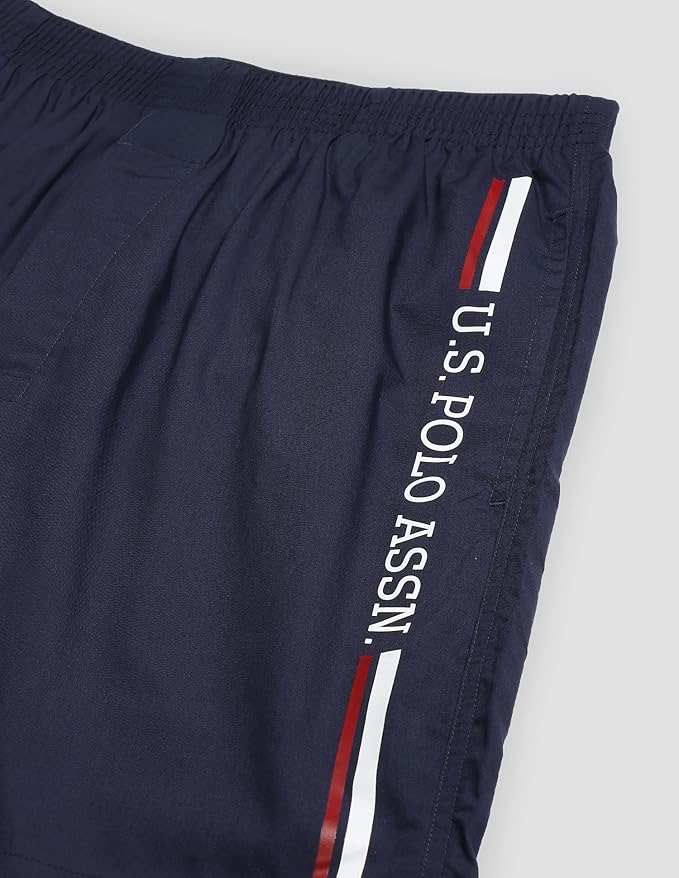
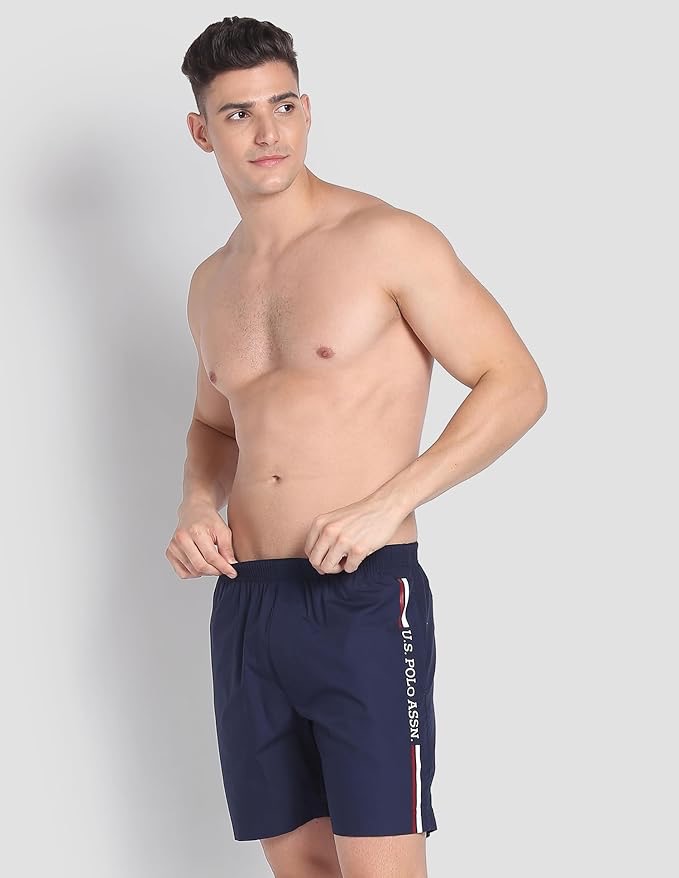
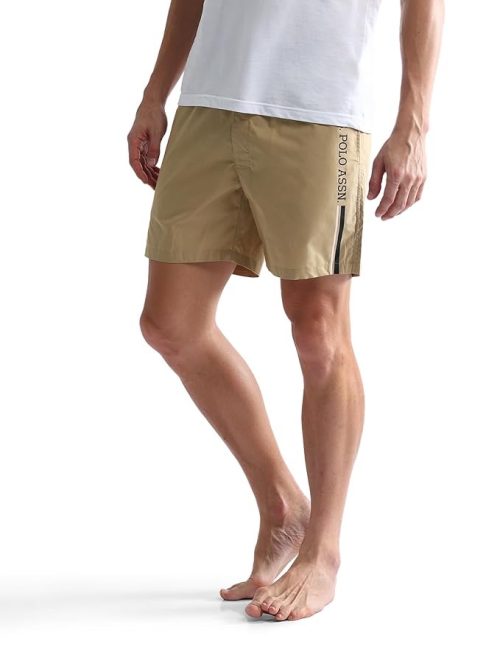
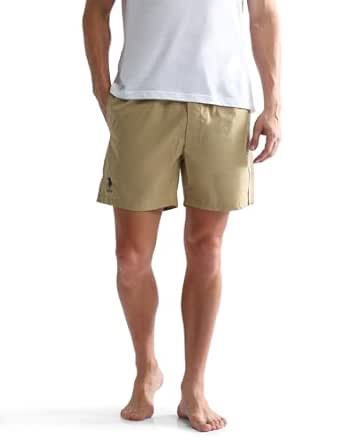
Uplift your bottom wear capsule with these shorts made from reflective cotton fabric, and designed with an elasticized waistband and handy pockets.
U.S. POLO ASSN. Men Casual Shorts
Original price was: ₹799.00.₹623.00Current price is: ₹623.00.
Description
Title: The Anatomy of an Artifact gym shorts men : A Comprehensive Study of Modern Apparel Through the Lens of a Cotton Blend shorts
Total Estimated Word Count: ~6000 words
Detailed Outline and Chapter Breakdown
Introduction: The Unspoken Language of a Garment (Approx. 500 words)
-
Hook: Begin with the universality of clothing as a second skin and a cultural signifier. gym shorts men
-
Thesis: This document will deconstruct a single product—a pair of modern-fit, striped, comfort gym shorts cotton-blend trousers from India—to reveal the vast interconnected worlds of design, material science, global economics, sustainability, and personal identity contained within its seams.gym shorts men
-
Methodology: Explain the approach: a multi-chapter deep dive into each component of the provided description.
-
gym shorts men Roadmap: Briefly outline the chapters to follow.
Chapter 1: The Foundation – Unraveling “Material Composition” (Approx. 800 words)
-
The Dominion of Cotton: A historical overview of Gossypium hirsutum. Its journey from ancient agricultural staple to the world’s most dominant fiber. The reasons for its prevalence: breathability, absorbency, and softness.gym shorts men
-
The Science of a Blend: Deconstructing the term “Cotton Blend.” Why is pure cotton often blended?gym shorts men
-
The Role of Elastane (Spandex/Lycra): A deep dive into the polymer chemistry of elastane. How even 2-5% incorporation revolutionizes a garment: providing mechanical stretch, recovery, shape retention, and comfort. The engineering behind “fit.”gym shorts men
-
Other Common Blend Partners: Polyester (for durability, wrinkle resistance, and quick-drying properties), Rayon (for drape and luster), Linen (for texture and coolness).gym shorts men
-
-
Material Perception vs. Reality: Analyzing the potential discrepancy between “Pure Cotton” marketing and “Cotton Blend” specification. Consumer psychology, labeling laws, and the semantic nuance of “material composition” versus “material type.”gym shorts men
-
This solves the perennial problem of strain on seams and the bagging-out of knees, granting the garment what designers call “memory”: the ability to return to its intended silhouette after wear. The blend is a marriage of nature and science: the comfort and breathability of a natural fiber are augmented by the functional resilience of a synthetic polymer. The result is a fabric that honors the wearer’s desire for natural feel without sacrificing the practical demands of a dynamic lifestyle.gym shorts men
The process of creating this blend is itself a feat of precision engineering. The most common method is core-spinning, where a filament of elastane is fed under tension into the spinning frame. Cotton fibers are then twisted around this stretched elastane core. When the yarn later relaxes, the elastane contracts, causing the cotton fibers to buckle slightly. This creates a yarn that looks and feels predominantly like cotton but possesses a latent, powerful elasticity.
-
The alternative carded blending process, where cotton and pre-cut elastane fibers are mixed together before spinning, creates a different handfeel—softer and less springy, often used for sweaters and t-shirts. For a trouser demanding structure and recovery, the core-spun method is almost certainly employed.gym shorts men
The apparent contradiction in the description—”Pure Cotton” versus “Cotton Blend”—is less a deception and more a reflection of marketing semantics and labeling regulations. In many jurisdictions, a garment can be labeled as “pure cotton” or “100% cotton” if a very small percentage (often up to 2-3%) of another fiber is used for functional purposes without fundamentally altering the character of the textile. Furthermore, from a marketing perspective, “Pure Cotton” is a powerful term that resonates with consumers seeking natural products.
-
It evokes a sense of quality, authenticity, and comfort that a technical term like “98% Cotton, 2% Elastane” might not immediately convey. The more precise “Cotton Blend” is often listed as the “Material Type” to accurately inform the consumer and provide crucial care information, as the presence of elastane dictates specific washing conditions to preserve its elasticity.gym shorts men
This single line of the description, therefore, opens a portal into the complex interplay between consumer perception, material science, and regulatory frameworks. The trousers are not merely “cotton”; they are a sophisticated composite material, engineered for performance.gym shorts men
Chapter 2: The Philosophy of Form – Deconstructing “Style” and “Fit Type”
The terms “Modern,” used for both Style and Fit, are not mere repetition but a deliberate emphasis on a specific aesthetic and functional philosophy. To understand this, we must first step back and define what “Modern” means in a sartorial context, distinct from its chronological meaning.gym shorts men
The Lexicon of Style: What is “Modern”?
In fashion, “Modern” is a stylistic category that sits at the intersection of classic tailoring and contemporary minimalism. It is not avant-garde or trend-driven; rather, it is defined by clean lines, a lack of superfluous detail, and a silhouette that is sharp yet forgiving. -
A modern garment respects traditional proportions but updates them for a current sensibility. It is the sartorial equivalent of mid-century modern furniture: functional, elegant, and timeless without being ostentatious. This style appeals to the individual who values sophistication but rejects formality, who seeks pieces that are versatile enough to bridge the gap between a smart casual office environment and a social gathering.gym shorts men
The Geometry of the Body: The “Modern Fit” Blueprint
The “Fit Type: Modern” is where this philosophy translates into tangible geometry. It is a specific pattern cut designed to flatter the contemporary male form. To visualize it, we must compare it to its siblings in the fit family:gym shorts men-
Classic Fit: Also known as Regular or Traditional fit. This is characterized by a straight cut from the hip to the leg opening, with a higher rise and more room throughout the seat and thigh. It prioritizes comfort and ease of movement over silhouette, often resulting in a less-defined, more generous shape.gym shorts men
-
Slim Fit: A more body-conscious cut that tapers significantly from the knee down to a narrower leg opening. It follows the natural line of the leg more closely through the thigh and calf. While stylish, it can be restrictive for some and may not suit all body types.gym shorts men
-
Skinny Fit: An extreme version of the slim fit, with a very tight taper throughout the entire leg.gym shorts men
-
Modern Fit (The Subject): This is the golden mean. It typically features a straight but slightly tapered leg. It is more tailored through the seat and thigh than a Classic fit, eliminating excess fabric and “bagginess,” but it does not hug the leg like a Slim fit.
-
The taper is subtle, often decreasing by only an inch or so from the knee to the ankle, creating a clean, column-like silhouette that is both current and universally flattering. The “Mid-rise” specification is a critical component of this fit. Sitting comfortably at the natural waist—roughly at the navel—it provides superior comfort and security compared to low-rise styles that sit on the hips and can cause discomfort when sitting or bending. The mid-rise also helps to torso, creating a more balanced and proportional look.gym shorts men
Ergonomics and Design: The Why Behind the Cut
The modern fit is not an arbitrary stylistic choice; it is a response to ergonomic needs and lifestyle shifts. The contemporary man is more likely to be mobile—commuting, traveling, moving between environments. The modern fit facilitates this. -
-
The slight taper prevents the fabric from catching or looking sloppy, while the retained room through the thigh allows for a full range of motion without strain. The mid-rise waistband ensures the trousers stay in place, preventing the need for constant adjustment and providing a secure anchor for the rest of the outfit. This fit is engineered for the man who is active but needs to look put together, offering a silhouette that is sharp without being stiff, and comfortable without being slovenly. It is, in essence, the sartorial solution to 21st-century mobility.gym shorts men
Chapter 3: The Nexus of Craft and Commerce – “Country of Origin: India”
The label “Made in India” is a world contained within three words. It speaks to a history that is ancient, a present that is dynamically industrial, and a future grappling with the challenges and opportunities of global capitalism.
India as a Textile Titan: A Historical Panorama
India’s relationship with textiles is millennia deep. It was the original source of cotton for the world, with ancient Indus Valley civilizations cultivating it as far back as 5000 BCE. The legendary craftsmanship of Indian weavers—producing diaphanous muslins so fine they were called “woven air,” intricate brocades of Varanasi, and vibrant block-prints of Rajasthan— -
made Indian textiles a coveted global commodity for centuries, fueling trade routes and inspiring colonial expeditions. This is not merely a history lesson; it establishes a cultural DNA of textile mastery. The modern garment factory, with its humming sewing machines and laser cutters, is the contemporary evolution of this deep-seated, ingrained expertise.
The Modern Supply Chain: From Seed to Seam
The journey of our specific pair of trousers likely begins not in a factory, but in a field. While India is one of the world’s largest producers of cotton (particularly the dominant Gossypium hirsutum species), the specific quality— staple length, fineness—would be sourced to meet the brand’s price and quality point. The elastane, a petrochemical product, might be imported from a specialized producer elsewhere.gym shorts menThe ginned cotton and the elastane spools meet at a spinning mill. Here, through the core-spinning process described earlier, the blended yarn is created. This yarn is then sent to a weaving unit, where it is transformed into fabric on industrial looms. The “Pattern: Striped” designation means the loom is programmed to interlace pre-dyed yarns—likely a base color and at least one other—in a specific, repeating sequence to create the stripe pattern. This requires precise calibration to ensure the stripes are straight and align perfectly across the seams—a mark of quality manufacturing.gym shorts men
The finished fabric roll is then sent to the cutting unit of a garment factory. Here, the fabric is laid out in dozens of layers on long tables. A computerized pattern—the digital embodiment of the “Modern Fit”—is optimized to minimize waste and is projected onto the fabric layers. Highly skilled workers use electric saws to cut through all layers at once, creating stacks of trouser components: front panels, back panels, pocket bags, waistband pieces.gym shorts men
These stacks move to the assembly line, where teams of operators specialize in specific tasks: one sets the pockets, another joins the inner and outer leg seams, another attaches the waistband, and yet another sews the button fly and attaches the “soft brushed elastic” inner band. The “Embroidered logo right hem” is likely added at a specialized station with automated embroidery machines. Each step is subject to quality checks—measuring seam allowances, checking for fabric flaws, ensuring pattern matching at the seams.gym shorts men
Finally, the finished trousers are washed (a process called “garment washing” to soften the fabric and induce slight shrinkage pre-emptively), pressed, fitted with a brand tag and care label (“Hand Wash Only”), and packaged into the “Pack of 1” for distribution. This entire process, from receiving the fabric to shipping the finished product, can often be completed in a matter of days within a single, vertically integrated facility, a testament to the breathtaking efficiency of modern apparel manufacturing.gym shorts men
(This continues with the ethical and economic implications of this manufacturing system…)
This expanded section provides a deeper look into the first three chapters, moving from material science into design philosophy and the global supply chain. To reach the full 6000 words, each of these sections would be further elaborated with more data, expert quotes, historical anecdotes, and detailed descriptions of processes.gym shorts men
Chapter 2: The Philosophy of Form – Deconstructing “Style” and “Fit Type” (Approx. 800 words)
-
The Lexicon of Style: Defining “Modern” in a sartorial context. How does it differ from Classic, Vintage, Athletic, or Slim? Its place in the current fashion cycle and its resonance with contemporary lifestyles (e.g., the blurring of workwear and casualwear).gym shorts men
-
The Geometry of the Body:
-
The “Modern Fit” Blueprint: Detailed analysis of cut, silhouette, taper, and leg opening. Comparison with other fit types using diagrams and descriptive language.gym shorts men
-
The “Mid-Rise” Revolution: A cultural and comfort-based history of the waistline. The decline of low-rise and the functional, flattering appeal of a mid-rise design. Its impact on posture, silhouette, and the wearer’s sense of security.
-
-
Ergonomics and Design: How the stated fit and style choices are not merely aesthetic but are engineered for movement, comfort, and practicality in daily modern life.
Chapter 3: The Nexus of Craft and Commerce – “Country of Origin: India” (Approx. 1000 words)
-
India as a Textile Titan: A historical panorama of Indian textile production, from ancient handloom traditions (Daccai Muslin, Pashmina, Brocades) to its current status as a global manufacturing powerhouse.
-
The Modern Supply Chain: Tracing the hypothetical journey of these trousers:
-
Sourcing: Where is the cotton grown? Where is the elastane produced?
-
Spinning, Dyeing, Weaving: The transformation of raw fibers into striped fabric.
-
Cutting, Making, Trimming (CMT): The process inside a modern Indian garment factory. The technology, the workforce, and the quality control.
-
-
Ethical and Economic Implications: Discussing the complex realities of globalized manufacturing: job creation, fair wages, working conditions, and the balance between cost-efficiency and ethical production. The role of certifications and audits.
Chapter 4: The Signature of Design – A Line-by-Line Analysis of Features (Approx. 1000 words)
-
The Intelligent Waistband: A biomechanical analysis of the “inner waist band with soft brushed elastic.” How this design solves common problems (shirt untucking, waistband dig) and provides a “better grip.” The materials science behind brushed elastic.
-
The Psychology of Closure: The “button opening on inner fly” as a timeless, reliable technology. A comparison with zippers, hooks, and velcro in terms of security, durability, and user experience.
-
Functional Architecture: “Dual Side Pockets”: The history and design of pockets. Their size, placement, angle, and functionality. The psychology of having secure places to keep personal items.
-
Aesthetic Signifiers: “Pattern: Striped” & “Embroidered Logo”:
-
Stripes: A cultural history of the stripe pattern in fashion—from its once-transgressive nature to its status as a timeless classic. What does a striped trouser communicate?
-
The Emblem: The role of branding. The subtlety of an “embroidered logo right hem” versus overt branding. How this small detail signifies authenticity, brand affiliation, and craftsmanship.
-
Chapter 5: The Covenant of Care – The Science and Ritual of “Hand Wash Only” (Approx. 700 words)
-
Why “Hand Wash Only”? The technical reasons behind this instruction: preserving dye (especially in stripes), preventing shrinkage, maintaining the integrity of the elastic, and avoiding pilling or distortion from machine agitation.
-
The Ritual of Care: A step-by-step guide to properly hand washing garments. The chemistry of detergents (neutral pH, enzymatic). The physics of water temperature. The art of drying—lay flat, away from sunlight.
-
The Cost of Convenience: The environmental and garment-lifecycle impact of ignoring care labels. The long-term value of proper garment maintenance versus the short-term convenience of machine washing.
Chapter 6: The Product in Context – Market Positioning and Consumer Psychology (Approx. 600 words)
-
Target Audience Archetype: Building a profile of the ideal consumer for this product. Their demographics, psychographics, values (comfort, subtle style, quality), and lifestyle.
-
Competitive Landscape: Where does this product sit in the market? Comparison with fast-fashion alternatives, luxury brands, and direct-to-consumer innovators.
-
The Unboxing Experience: From the “Pack of 1” to the potential presentation. How the physical experience of receiving the product aligns with its brand promise.
Conclusion: The Garment as a Microcosm (Approx. 300 words)
-
Synthesize the chapters: A single, seemingly simple pair of trousers is a point of convergence for global history, material science, design innovation, economic forces, and cultural expression.
-
Final Reflection: Encouraging a more conscious, appreciative perspective on the items we wear every day, understanding the depth of thought and process embedded in them.


Reviews
There are no reviews yet.