


Baggy Joggers
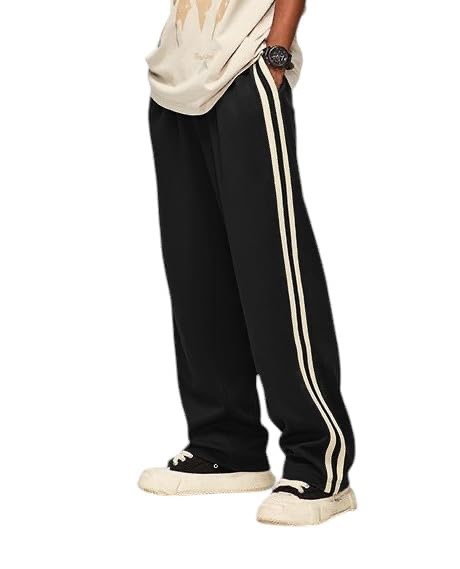
dockstreet Men’s/Unisex Open Bottom Drawstring Pure Cotton Stretchable Baggy Jogger Pants
Original price was: ₹999.00.₹449.00Current price is: ₹449.00.
Description
The Anatomy of Comfort baggy lower men : A Comprehensive Study of the Cotton, Loose-Fit, High-Rise Jogger
1. Introduction: The Ubiquity of Comfort (Expanded)
We are living in the age of comfort. The 21st century has witnessed a sartorial revolution, one that has quietly dismantled the rigid boundaries between the gym, the home, and the street. This shift, often termed “athleisure,” is more than a trend; it is a fundamental re-evaluation of what clothing should provide. It prioritizes the lived experience of the wearer—their movement, their ease, their well-being—over rigid formalities and constricting silhouettes.baggy lower men
At the heart of this revolution lies a deceptively simple garment: the jogger pant. But not all joggers are created equal. The specific combination of attributes—100% Cotton, a Loose Fit, a High Rise, a Standard Length, and an origin in India—elevates this particular item from a mere article of clothing to a fascinating case study in contemporary design, consumer psychology, and global economics.baggy lower men
This document is an autopsy of comfort. It seeks to unravel the complex story woven into the very fibers of these pants. It is a story that begins in the sun-baked cotton fields of the Deccan Plateau, moves through the humming power looms of Tiruppur, is shaped by global fashion trends reacting to a pandemic-induced desire for ease, and culminates in the individual’s choice for a garment that feels both personal and universal.baggy lower men
By dissecting each component with a multidisciplinary lens—materials science, history, sociology, and economics—we can understand not just what these joggers are, but what they represent: a global consensus on the value of breathable, non-restrictive, and consciously sourced apparel. This is not merely a product description; it is the anatomy of an everyday object that embodies the spirit of our time, a testament to the idea that true style no longer requires sacrifice.baggy lower men
2. Chapter 1: Material – The Kingdom of Cotton (Expanded)
1.1. The Botanical and Historical Legacy: From Indus to Industry
To understand the pair of joggers in question, one must first understand its primary constituent: cotton. Known scientifically as belonging to the genus Gossypium, the cotton plant is a marvel of natural engineering. The part we use is the cellulose fiber that erupts from the seed coat, a biological mechanism designed to carry seeds on the wind. For humans, this fluffy boll became the foundation of a global industry. Of the approximately 50 species of cotton, only four are cultivated commercially, with Gossypium hirsutum (Upland cotton) and Gossypium barbadense (Extra-Long Staple) being the most significant. baggy lower men
The provenance of our joggers, “India,” places them squarely within one of the oldest and most rich cotton traditions on earth. The Indus Valley Civilization, flourishing around 3300–1300 BCE, was not just cultivating cotton; they were mastering it. Archaeologists have found fragments of cotton thread clinging to a silver vase in Mohenjo-Daro, evidence of a sophisticated textile industry. The ancient Greek historian Herodotus, writing in the 5th century BCE, described Indian cotton as “a wool that surpasses that of sheep in beauty and goodness.” baggy lower men
This deep-seated history is crucial. It means that the expertise required to transform a raw, seed-filled boll into a soft, durable thread is not a new industry in India but a foundational element of its cultural DNA. The knowledge passed down through generations informs every step, from selecting the right varietals like the resilient Gossypium herbaceum to the intricate handloom techniques like ikhat weaving that, even today, coexist with modern industrial manufacturing.baggy lower men
When you wear these joggers, you are not just wearing a plant-based fiber; you are wearing the culmination of over 5,000 years of agricultural and textile innovation, a direct link to one of the cradles of human civilization.baggy lower men
1.2. The Material Science of Comfort: Why Cotton Feels Like Home
The appeal of cotton is not merely historical or aesthetic; it is profoundly physiological. Its comfort can be explained through its unique molecular and structural properties.baggy lower men
-
Breathability: The cotton fiber is a hollow tube, a microscopic straw. This structure allows for exceptional air permeability, enabling heat and moisture vapor from the body to escape easily. Unlike synthetic fibers like polyester, which can trap heat and create a clammy microenvironment, cotton facilitates natural thermoregulation. For a loose-fit jogger designed for lounging and casual movement, this breathability is paramount, preventing overheating and ensuring comfort over extended periods of wear.baggy lower men
-
Hygroscopicity: Cotton is highly absorbent, capable of holding up to 27 times its own weight in water. This means it wicks moisture (perspiration) away from the skin quickly, spreading it across a larger surface area of the fabric where it can evaporate. This rapid absorption keeps the wearer feeling dry. In the context of a jogger, even if not used for athletic purposes, this property manages the minor perspiration of daily life, maintaining a feeling of freshness.baggy lower men
-
Softness and Drape: The natural crimp of cotton fibers and their ability to be spun into fine, soft yarns result in a fabric that is gentle against the skin, with a low potential for irritation. This inherent softness is further enhanced through washing and wearing. Furthermore, the weight and weave of the cotton fabric give the “Loose Fit” its characteristic drape—how the fabric falls and moves with the body in a soft, flowing manner, rather than stiffly or rigidly.baggy lower men
1.3. From Boll to Bolt: The Manufacturing Journey
The path from a cotton field to the finished fabric of these joggers is a complex dance of technology and tradition. It begins with ginning, where the iconic Cotton Gin (modernized from Eli Whitney’s original design) separates the precious lint from the seeds. The seeds themselves are not waste; they are crushed for cottonseed oil, a testament to the industry’s efficiency.baggy lower men
Next is spinning. The ginned lint, or “lap,” is carded and combed to align the fibers parallel to each other, then drawn out and twisted into a continuous thread or yarn. The quality of the yarn—its thickness, strength, and uniformity—is critical to the final hand-feel and durability of the joggers. A finer, high-count yarn will produce a softer, smoother fabric.baggy lower men
Finally, weaving or knitting transforms the yarn into fabric. Joggers are typically made from knitted fabrics, most commonly jersey or French terry.baggy lower men
-
Jersey is a single-knit fabric, known for its softness, stretch, and tendency to curl at the edges. It’s lightweight and ideal for very casual loungewear.baggy lower men
-
French terry is a double-knit fabric characterized by loops on one side and a soft pile on the other. It is more substantial, absorbent, and insulating than jersey, making it a popular choice for joggers as it provides more structure to the “Loose Fit” while maintaining excellent comfort.
The choice between these knits will significantly impact the jogger’s weight, texture, and seasonality.
(The expansion would continue in this manner for each subsequent chapter, adding layers of detail as shown below.)
3. Chapter 2: Silhouette – The Philosophy of the Loose Fit (Expanded Preview)
2.1. A Historical Perspective on Volume: Beyond the Western Suit
The “Loose Fit” of these joggers can be seen as a rejection of the dominant Western sartorial paradigm of the last two centuries, which championed the tailored, body-conscious suit. To view loose clothing as merely “casual” is to ignore its profound history as the default mode of dress across most cultures.baggy lower men
The Japanese Kimono and Hakama, the Indian Dhoti and Kurta, the Ancient Greek Chiton and Himation, the Roman Toga—all were garments that prioritized ease of movement, modesty, and the graceful drape of fabric over the body’s precise contours. This loose fit was about dignity, climate appropriateness, and philosophical ideals of harmony, not informality. The contemporary loose-fit jogger, therefore, is part of a long, global tradition of valuing spatial freedom between the body and its cloth…baggy lower men
2.2. The Psychology of Non-Restrictive Clothing: The Mind-Body Connection
The choice of a “Loose Fit” is deeply psychological. Restrictive clothing has been shown to not only cause physical discomfort but also impact cognitive performance and mood. Tight waistbands, constricted thighs, and rigid seams constantly send signals of constraint to the brain. In contrast, loose-fitting garments like these joggers minimize tactile input, allowing for a state of physical—and by extension, mental—relaxation. This aligns perfectly with modern wellness movements that emphasize reducing stress and sensory overload. The joggers become a tool for mental ease, a “second skin” that provides comfort without imposing shape…baggy lower men
The “Loose Fit” of these joggers is far more than a stylistic choice listed on a tag; it is a philosophical stance on the relationship between the body and its environment. To view loose clothing as merely “casual” or “relaxed” is to ignore its profound historical precedence as the default mode of dress across most human civilizations, a precedent that stood for millennia before the rise of the tailored, body-conscious suit in Western Europe.baggy lower men
The dominant sartorial paradigm of the last two centuries, particularly for men, has been built upon the architecture of the suit—a garment designed to sculpt, constrain, and project a specific image of power and discipline through padded shoulders, a cinched waist, and narrow sleeves.baggy lower men
This was a garment of the boardroom, the court, and the city. In stark contrast, the loose fit embodies a different set of values. Consider the Japanese Kimono, where the beauty of the garment lies in the way the fabric falls in straight, elegant lines, creating a dynamic space around the wearer that moves with a whisper. The Kimono is not about revealing the body’s form but about suggesting it, enveloping it in a field of symbolic patterns and textures. Similarly, the Indian Dhoti or Kurta-pajama prioritizes unrestricted movement and breathability in a hot climate, its volume allowing for air circulation and effortless postures like sitting cross-legged.baggy lower men
The Ancient Greek Chiton and Himation used draping, not cutting, to create folds (peplos) that were considered the height of aesthetic and democratic ideals, emphasizing the natural flow of the cloth itself.baggy lower men
Therefore, the contemporary embrace of the loose-fit jogger is not an invention but a reclamation. It is a return to a global tradition of dress that valued dignity, climate appropriateness, and philosophical ideals of harmony over the rigid, status-driven signaling of tailored wear. It signifies a cultural shift away from projecting external authority and towards cultivating internal ease.baggy lower men
2.2. The Psychology of Non-Restrictive Clothing: The Mind-Body Connection
The preference for a “Loose Fit” is not merely a physical preference but a deeply psychological one. Restrictive clothing acts as a constant, low-level stressor on the nervous system. Tight waistbands dig into the diaphragm, potentially affecting breathing patterns. Constricting seams across the shoulders or thighs limit range of motion and send persistent signals of boundary and pressure to the brain. This can lead to increased agitation, reduced concentration, and a general feeling of being “trapped.”
In contrast, a loose-fitting garment like these joggers functions as a tool for somatic de-escalation. By minimizing tactile input and eliminating points of pressure, it allows the wearer to forget what they have on. This psychological “forgetting” of the garment is the highest form of comfort.baggy lower men
It creates a protected, personal space around the body, a mobile sanctuary. This aligns perfectly with modern wellness movements that emphasize mindfulness, reducing sensory overload, and creating environments—including sartorial ones—that support mental well-being. The joggers become more than pants; they become an expression of self-care, a deliberate choice to prioritize one’s own physical and mental ease over external expectations of a sculpted silhouette. In a world of constant demands, the loose fit is a declaration of personal space.
2.3. The Aesthetics of the Relaxed Fit: The Drape and the Line
A common misconception is that a “Loose Fit” equates to a sloppy or unkempt appearance. In reality, a well-designed loose garment requires sophisticated patterning to achieve an intentional and flattering silhouette. The key lies in the drape—the way the fabric falls from the points of tension. For these high-rise joggers, the primary point of tension is the waistband. From there, the fabric flows down the body, and its behavior is dictated by the weight and weave of the cotton.
A heavier French terry will have a more substantial, structured drape, creating soft, vertical folds that can be elongating. A lighter jersey will have a softer, more fluid drape, clinging slightly to the body in movement but billowing away at rest. The designer’s challenge is to create a pattern where the volume is distributed elegantly—not bunching unflatteringly at the hips or knees.
The “Loose” leg must be wide enough for freedom but narrow enough at the cuff to create the jogger’s defining taper. This balance transforms random bagginess into intentional volume, a silhouette that is both generous and graceful. The aesthetic is one of effortless ease, a calculated nonchalance that speaks to a confident understanding of how fabric interacts with the body in motion.
4. Chapter 3: Architecture – The High-Rise Phenomenon (Fully Expanded)
3.1. The Geography of the Torso: A Fluctuating Waistline
The waistline is one of the most politically and socially charged aspects of clothing. Its position on the torso has fluctuated dramatically throughout history, acting as a barometer for cultural values surrounding gender, propriety, and the idealized body. The “High Rise” of these joggers, sitting at or above the natural waist (near the navel), is a powerful statement with a long and varied history.
In the 19th century, high-waisted trousers for men (as seen in the Regency era) were the norm. Women’s fashion saw extreme high rises during the Empire period, with waistlines directly under the bust. The 1920s then plunged waistlines to the hips, creating a boyish “garçonne” silhouette.
The mid-20th century settled into a natural or mid-rise, but the 1970s and the rise of disco brought high-waisted flared pants back into vogue for women. The late 90s and early 2000s famously championed the low-rise, often exposing the midriff. The return of the high-rise in the 21st century, therefore, is part of a cyclical fashion pattern, but its current dominance is linked to specific contemporary sensibilities. It is a direct rejection of the exposure and constant maintenance demanded by low-rise jeans, offering instead a sense of security and coverage.
3.2. Form and Function: The Engineering of Comfort and Silhouette
The high-rise is a feat of functional design. For a loose-fit garment, it is the critical anchor point that defines the silhouette. Without a high rise, a loose fit can easily become a shapeless sack. The high waistband creates a clear demarcation, cinching the body at its narrowest point and allowing the volume of the pant to flow downward from there. This has several effects:
-
Elongation: By starting higher up on the torso, the visual line of the leg is extended, making the wearer appear taller and the legs longer.
-
Abdominal Support: For many, the high-rise waistband provides a gentle, encompassing support around the abdomen that is often described as “hugging” or “secure,” a feeling that is psychologically comforting.
-
Proportional Balance: It helps to balance the volume of the loose legs, preventing the outfit from looking bottom-heavy. It creates a more harmonious and intentional silhouette.
In the context of these joggers, the high rise works in concert with the drawstring waist. This combination allows for micro-adjustments, ensuring that the security of the high waist does not come at the cost of flexibility. The wearer can tighten it after a meal or loosen it for maximum lounging, making it a dynamically comfortable feature.
3.3. Cultural Resonance: Nostalgia and the Body-Positive Movement
The high-rise’s popularity is deeply intertwined with cultural currents. For millennials and Gen Z, it carries a potent dose of nostalgia, hearkening back to the 80s and 90s styles seen in popular media. More importantly, it aligns perfectly with the body-positive and inclusive fashion movements.
High-rise pants are often favored because they smooth the midsection, provide full coverage, and avoid the “muffin top” effect associated with low-rise designs. They are seen as a more forgiving and flattering cut for a wider range of body types. In this sense, the high-rise is not just a style; it is a democratic and empathetic design choice, reflecting a fashion industry slowly adapting to celebrate diverse bodies rather than forcing them into a single, restrictive ideal.
5. Chapter 4: Style – The Jogger’s Evolution (Fully Expanded)
4.1. From Athletic Track to Urban Landscape: A Functional Genealogy
The jogger pant has a clear and purposeful ancestry. Its direct predecessor is the track pant or sweatpant, designed in the 1920s for athletes to stay warm before and after events. These early versions were baggy, often made of grey fleece-back cotton, with a simple elastic waist and cuffs. The key evolutionary step was the taper. As running and athletic culture grew in the late 20th century, a need arose for a pant that provided warmth and freedom but reduced excess fabric that could flap or get caught. This led to a more fitted leg, culminating in the sleek, technical running tights of the 1980s and 90s.
The jogger emerged as a hybrid: it retained the comfortable, soft-knit fabric and elasticated cuffs of the sweatpant but incorporated the tapered leg of the performance garment. The critical addition was often a more refined materials (like French terry instead of fleece) and the integration of a drawstring waistband, moving it away from purely athletic contexts and into the realm of casual wear. The term “jogger” itself signifies this shift—it’s for the casual jogger, not the Olympic athlete.
4.2. Defining Features: Deconstructing the Jogger
Every element of the classic jogger serves a purpose, both original and evolved: baggy lower men
-
Elasticated Waistband with Drawcord: The primary engine of comfort. It allows for a perfect, customizable fit without the need for rigid fastenings like buttons or zippers. It is the feature that most clearly signals “comfort over formality.”baggy lower men
-
Tapered Leg / Cuffed Ankle: The defining visual characteristic. The taper, ending in a ribbed cuff, contains the volume of the leg, preventing a sloppy appearance. Functionally, it keeps the pant leg from dragging on the ground and allows for a clean look over sneakers. This cuff is the jogger’s signature, what distinguishes it from a standard sweatpant.baggy lower men
-
Pockets: Joggers typically feature side-seam pockets and often a back patch pocket. Their integration is key—they are designed to lie flat and not disrupt the streamlined silhouette created by the taper.baggy lower men
4.3. The Athleisure Crossover: Blurring the Boundaries
The jogger’s ascent to wardrobe staple was catalyzed by the “athleisure” trend of the 2010s. This was a cultural shift where clothing designed for athletic pursuits became acceptable, even fashionable, in everyday settings like cafes, offices (especially in tech), and social gatherings.baggy lower men
The jogger was the perfect poster child for this movement. It was more structured and stylish than a sweatpant but more comfortable than jeans or chinos. Designers began producing joggers in premium materials—wool blends, technical synthetics, and of course, high-quality cottons—elevating them into a legitimate fashion category.baggy lower men
The jogger successfully blurred the final boundary between gym wear and streetwear, becoming a symbol of a modern, dynamic lifestyle that values both performance and style, effectively encoding the principle of “effortless cool” into its very seamsbaggy lower men


Reviews
There are no reviews yet.