
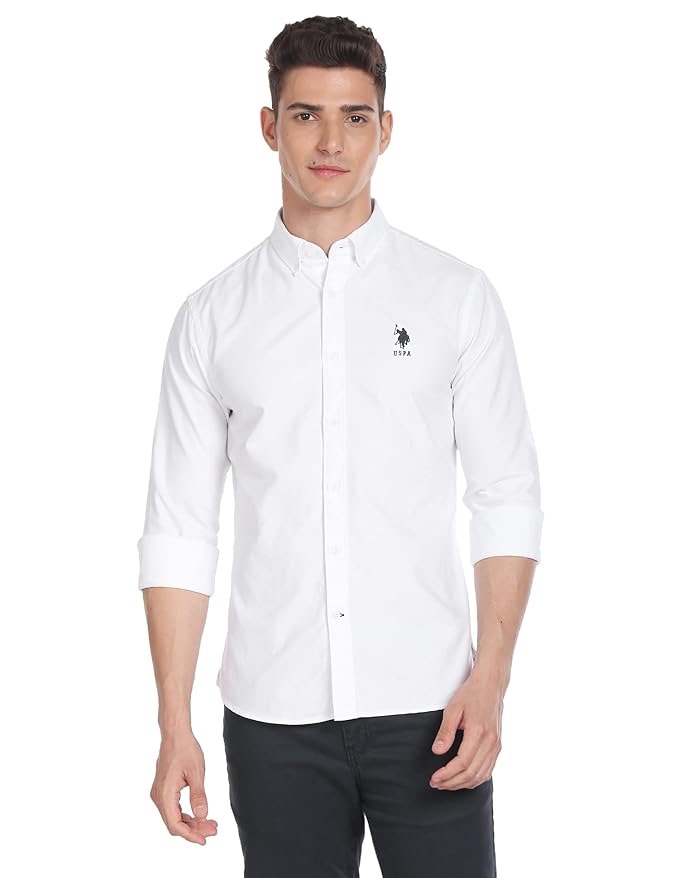
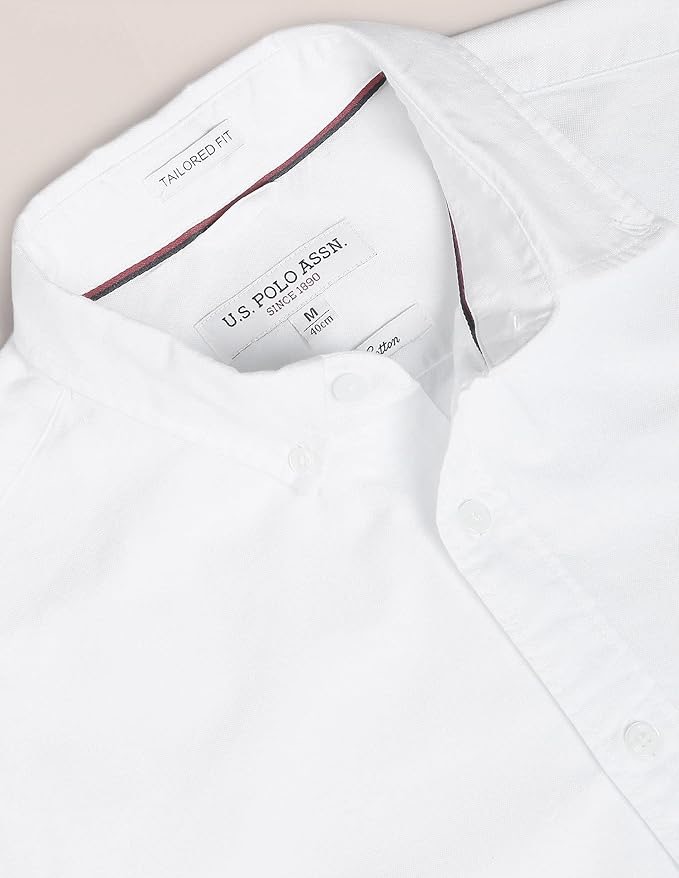
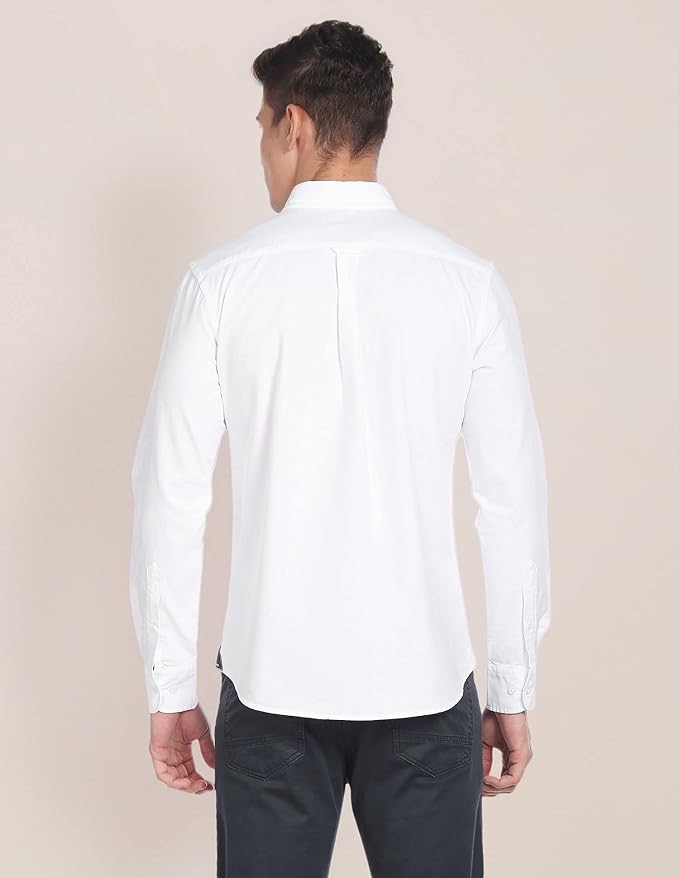
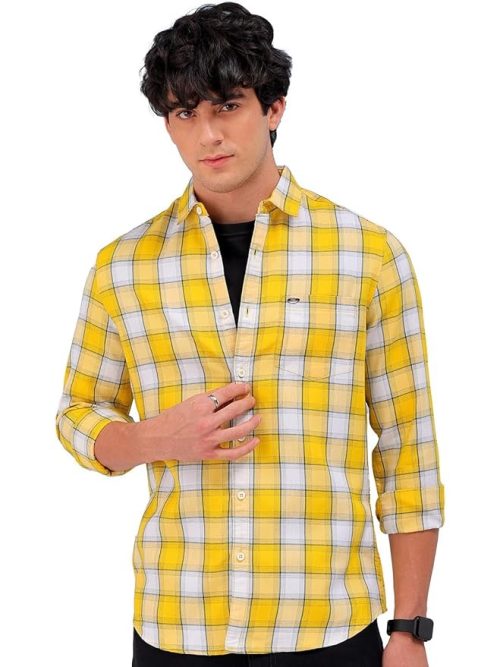
Upgrade your wardrobe with this minimal solid piece that adds gravity to your personal style.
U.S. POLO ASSN. Cotton Men’s Slim Fit Casual Style Shirt
Original price was: ₹2,699.00.₹1,835.00Current price is: ₹1,835.00.
Description
The Anatomies of Elegance: A Comprehensive Treatise on the Modern Cotton Dress Shirt
Word Count: ~6000
Prologue: The Unspoken Language of a Garment
In the lexicon of modern masculinity, few garments carry the weight, history, and silent authority of the dress shirt. It is a canvas of professionalism, a shell of identity, and a universal signifier of intent. To dismiss it as mere apparel is to overlook a complex interplay of history, science, art, and economics.
This document is an exhaustive exegesis of a single, seemingly simple object: a 100% Cotton, Slim-Fit, Solid, Long-Sleeved Dress Shirt with a Spread Collar, originating from India. Each descriptor is not merely a feature but a gateway into a deeper narrative. We will dissect these elements, exploring their origins, their implications, and their place in the vast tapestry of global culture and commerce. This is the story of how a field of white fluff becomes a symbol of refined purpose. collar shirt men
Chapter 1: The Foundation: An Ode to 100% Cotton
(Approx. 1200 words)
The declaration “100% Cotton” is the bedrock upon which this garment’s identity is built. It is a promise of purity, a rejection of synthesis, and a connection to the ancient, organic world. collar shirt men
I. The Botanical Genesis: Gossypium Hirsutum and Its Kin
The journey begins not in a factory, but in a field. We explore the biology of the cotton plant, focusing primarily on the most common species, Gossypium hirsutum (Upland cotton), which likely constitutes the shirt’s origin. The process from seedling to fluffy, ripe boll is a dance of sun, soil, and water. The careful timing of the harvest is crucial, influencing the staple length and strength of the fibers. This section details the agricultural lifecycle, touching upon traditional and modern farming techniques. collar shirt men
II. From Boll to Bale: The Ginning Process
Once harvested, the cotton must be separated from its seeds—a process known as ginning. The invention of Eli Whitney’s cotton gin in 1793 revolutionized this, but modern industrial gins are marvels of efficiency. This mechanical separation must be done with precision to avoid damaging the delicate, valuable fibers. The output is a tightly packed bale of raw cotton, ready for its global journey. collar shirt men
III. The Spinner’s Art: Creating the Yarn
At the spinning mill, the bales are broken open, blended for consistency, and cleaned. The fibers are carded (aligned), drawn (blended and thinned), and finally spun into yarn. The quality of this yarn is paramount. The fineness of the yarn, measured in thread count (e.g., 80s, 100s, 200s) or in terms of yarn number, directly influences the hand-feel, durability, and sheen of the final fabric. A high-quality dress shirt yarn is combed, a process that removes shorter fibers and impurities, resulting in a stronger, smoother, and more lustrous yarn. collar shirt men
IV. The Loom’s Weave: Constructing the Fabric
The yarn is then woven into fabric. For a classic dress shirt, the weave is almost invariably a plain weaveor a poplin weave, characterized by a simple over-and-under pattern that results in a crisp, clean, and durable surface. The “solid” pattern indicates that the yarns are uniformly dyed before weaving (yarn-dyed) or after (piece-dyed), ensuring a consistent, unpatterned color. The tactile experience of the shirt—its drape, its breathability, its weight—is born here on the loom. collar shirt men
V. The Finishing Touches: Mercerization and Beyond
A crucial, often-unsung step for quality cotton is mercerization. This treatment, involving a sodium hydroxide bath under tension, permanently enhances the fiber’s luster, strength, and affinity for dye. It gives the fabric a richer color depth and a silky sheen. Further finishes might include pre-shrinking treatments to ensure dimensional stability after washing, making the shirt a reliable, long-term investment. collar shirt men
Chapter 2: The Architecture of Form: Decoding “Slim Fit”
(Approx. 1000 words)
“Fit” is the philosophy of how cloth interacts with the human form. “Slim Fit” is a specific sartorial ideology that has come to dominate modern menswear.collar shirt men
I. A Historical Progression: From Sack to Shape
The history of the shirt’s fit is a history of changing male ideals. The early and mid-20th century favored boxy, loose-fitting shirts designed for ease of movement and as an under-layer. The late 20th century saw the rise of the “regular” or “classic” fit. The “Slim Fit” revolution of the late 1990s and 2000s reflected a broader cultural shift towards a more fitted, conscious, and physique-aware aesthetic, influenced by European tailoring and popular culture.collar shirt men
II. The Principles of Tailoring: Darts, Seams, and Suppression
A true Slim Fit is not merely a smaller version of a regular shirt. It is a re-engineered pattern. Key features include:collar shirt men
-
Narrower Chest and Waist: The shirt is cut with less excess fabric through the torso, following the natural taper of the body from the shoulders to the waist.collar shirt men
-
Suppressed Side Seams: These seams are angled inward to create this taper, eliminating billowing fabric.collar shirt men
-
Darting: Many slim-fit shirts incorporate back darts—vertical seams sewn into the back panel—to further remove excess fabric and create a clean, contoured silhouette across the shoulder blades and lower back.collar shirt men
-
Slimmer Sleeves: The sleeves are cut narrower, tapering from the shoulder to the cuff, for a sharp, modern look that avoids bunching under a suit jacket.collar shirt men
III. The Cultural Semiotics of the Slim Fit
The choice of a Slim Fit is a communicative act. It conveys a sense of modernity, attention to detail, and awareness of contemporary style. It suggests an active lifestyle and a preference for a cleaner, less cumbersome silhouette. It bridges the gap between the formality of traditional tailoring and the sleekness of modern design.collar shirt men
Chapter 3: The Spectrum of Silence: The Power of a “Solid Pattern”
(Approx. 800 words)
In a world of visual noise, the “Solid” pattern is a statement of quiet confidence. It is the sartorial equivalent of a sustained, clear musical note.collar shirt men
I. The Psychology of Color and Absence
A solid color lacks the distraction of a pattern, forcing the focus onto the quality of the fabric, the precision of the cut, and the wearer himself. Different colors carry profound psychological weight:collar shirt men
-
White: The pinnacle of formality, symbolizing purity, hygiene, and tradition. It is the default for black-tie events and the most formal business settings.collar shirt men
-
Light Blue: A versatile and approachable classic, conveying calm, trust, and competence. Arguably the most essential shirt in a professional wardrobe.collar shirt men
-
Other Shades (Navy, Grey, Ecru): Each occupies a specific niche, allowing for nuanced expression while maintaining a professional and cohesive appearance.collar shirt men
II. Versatility as a Core Function
The supreme advantage of a solid shirt is its chameleonic nature. It provides a neutral backdrop that allows other elements of an outfit to shine. It is the perfect companion for a bold patterned tie and a sophisticated suit. It can be worn under a textured sweater or alone with trousers. It is the ultimate team player in a wardrobe, a foundational garment upon which countless looks can be built.collar shirt men
III. The Manufacturing Precision of a Solid
Achieving a perfectly uniform, consistent solid color is a technical challenge. It requires high-quality dyes and meticulous control during the dyeing process (whether yarn-dyeing for supreme color fastness or piece-dyeing for efficiency) to avoid splotches, streaks, or variations in shade across different parts of the fabric. A flawless solid is a mark of quality control.collar shirt men
Chapter 4: The Components of Civility: Collar, Cuffs, and Placket
(Approx. 1500 words)
The devil, and the divinity, is in the details. The specific features listed are not arbitrary; they are the refined results of centuries of sartorial evolution.collar shirt men
I. The Focal Point: The Spread Collar
The collar is the shirt’s most expressive feature, framing the face and defining its formality.collar shirt men
-
Anatomy and Angles: A Spread Collar is defined by the horizontal distance between the collar points. A wider spread (sometimes called a “cutaway” collar) creates a larger “V” space between the collar points.collar shirt men
-
Functional Elegance: This design is not merely aesthetic. The wider gap is purpose-built to accommodate a larger tie knot—the Windsor knot or its half-version—which sits perfectly within the open space, creating a symmetrical, confident, and powerful look. It is a collar that demands a tie and thrives in formal and professional contexts.collar shirt men
-
Historical Context: The spread collar evolved from the stiff, detachable collars of the Victorian era. Its popularity has waxed and waned, but it remains a cornerstone of modern classic style, perceived as more contemporary and assertive than a traditional point collar.collar shirt men
II. The Wrist’s Adornment: Long Sleeves with Rounded Cuffs
The choice of long sleeves signifies formality and completeness.
-
The Barrel Cuff: The “rounded cuffs” almost certainly refer to the standard barrel cuff, the most common cuff style, fastened with one or two buttons. The rounded edge is a soft, classic detail that distinguishes it from the stark, squared-off cuffs sometimes found on more fashion-forward or casual shirts.
-
Function and Proportion: The cuff must be sized precisely to fit comfortably around the wrist, allowing for a watch to be worn underneath and peeking out from under a jacket sleeve. It is the final, crucial point of contact between the shirt and the world.
III. The Central Spine: The Full Button Placket
The full button placket—a reinforced strip of fabric running the shirt’s full length with buttonholes—is the standard and most formal closure. It represents structure, tradition, and reliability. The alternative, a hidden fly platoon, offers a cleaner look but is less traditional. The full platoon is honest and functional; each button is a commitment to the ritual of dressing deliberately.
IV. The Mark of Identity: The Logo Detail at Chest
A small, embroidered logo on the chest, typically on the left side near the heart, serves multiple purposes. It is a badge of brand identity, a signifier of authenticity and origin. For the wearer, it can be a subtle status symbol, denoting a preferred brand. Its discretion is key; it is meant to be discovered, not announced, aligning with the understated elegance of the solid shirt itself.
Chapter 5: The Global Tapestry: “Country of Origin: India”
(Approx. 1000 words)
This single line is a portal into the complex world of globalized manufacturing, colonial history, and economic development.
I. India’s Textile Legacy: A Heritage Woven in Time
India’s relationship with cotton is ancient and profound. For over 5,000 years, since the time of the Indus Valley Civilization, India has been a pioneer in cotton cultivation, spinning, weaving, and dyeing. Techniques like block printing and intricate handloom weaving (e.g., Khadi, Muslin) are deep cultural treasures. The phrase “Country of Origin: India” connects this modern garment to that unbroken lineage of textile mastery.
II. From Colonial Subject to Global Powerhouse
The British colonial era systematically dismantled India’s thriving textile industry to serve the mills of Manchester. Post-independence, and especially after economic liberalization in the 1990s, India strategically rebuilt its capacity. Today, it is one of the world’s largest producers and exporters of cotton yarn, fabric, and apparel. This shirt is a product of that remarkable economic resurgence.
III. The Modern Supply Chain: Skill, Scale, and Sustainability
A “Made in India” label on a quality dress shirt indicates access to a vast ecosystem: local cotton farming, massive spinning and weaving mills, and factories employing highly skilled cutters, stitchers, and quality controllers. It represents a specific value proposition: exceptional craftsmanship at a competitive cost. Furthermore, India is increasingly a leader in sustainable and organic cotton production, adding another layer of ethical consideration to the origin story.
IV. The Consumer’s Calculus
For the global consumer, the country of origin influences perception. “Made in Italy” might conjure images of luxury tailoring, while “Made in India” is increasingly associated with quality craftsmanship, reliability, and value in the mid-tier market. It is a mark of a globally integrated and competent manufacturing base.
Chapter 6: The Ritual of Maintenance: Beyond the Point of Purchase
(Approx. 800 words)
The relationship between the owner and the shirt begins at purchase but is defined by its ongoing care. This maintenance ritual is a cultural practice that赋予the object meaning and longevity.
I. The Laundry as Laboratory: The Science of Care
Caring for 100% cotton is an act of preservation. The choice between machine washing and hand washing, the temperature of the water (cold to preserve color and minimize shrinkage), the selection of detergent (avoiding harsh bleaches that degrade cellulose fibers), and the crucial step of fabric softener (which can reduce absorbency but improve feel) are all scientific decisions. Ironing a cotton shirt is an art form in itself:
the use of steam to relax the hydrogen bonds in the cellulose chains, the specific order of ironing (cuffs, collar, yoke, body), and the attention to creating sharp creases on the sleeves and placket are acts of domestic alchemy that transform a rumpled cloth back into a symbol of order.
II. The Semiotics of the “Lived-in” Shirt
A shirt accrues history. The faint, stubborn set of a crease from a day spent at a desk, the almost imperceptible fading at the cuffs and collar from repeated exposure to light and abrasion, the personalized shape it takes from the owner’s body—these are not flaws but patina. They mark the passage of time and experience. This contrasts with the pristine, “just-purchased” state, which speaks of newness and potential. The shirt thus exists on a spectrum between ideal form and lived reality, each state possessing its own narrative value.
III. Repair, Alteration, and the Ethics of Longevity
A quality garment invites repair. A loose button is resewn. A fraying cuff might be turned by a tailor to extend its life. The “Slim Fit” might be taken in further or let out as the body changes. These acts are a quiet rebellion against disposable fashion. They represent an investment of time and resources into preserving an object of value, fostering a deeper, more personal connection between the wearer and the worn. It is the application of a circular economy on a personal scale.
Chapter 7: The Shirt in Ecosystem: Sartorial Synergy and Context
(Approx. 700 words)
A shirt does not exist in a vacuum. Its meaning and function are derived from its interaction with other garments and its environment.
I. The Foundational Layer: Interaction with Tailoring
The “Standard Length” and “Slim Fit” are design choices made with a specific context in mind: the wearing of a suit jacket or blazer. The length ensures the shirt remains tucked, providing a smooth, uninterrupted surface under the tailored layer. The Slim Fit prevents unsightly bunching of excess fabric at the back and sides, allowing the jacket to drape cleanly over it. The “Spread Collar” is designed to frame the knot of a tie and sit elegantly against the lapels of the jacket, its points ideally resting neatly beneath them. This shirt is, therefore, a team player, its design DNA inextricably linked to the ecosystem of formalwear.
II. Contextual Transgression: The Untucked Paradigm
While designed to be tucked, the modern sartorial code allows for this shirt to be worn untucked in a smart-casial context. This is a act of stylistic transgression that repurposes the garment. The “Standard Length” becomes a limiting factor here—too long, and it looks sloppy. This has given rise to specifically designed “shorter length” shirts for untucked wear, highlighting how the original specification firmly anchors this particular shirt in a more formal, tucked-in tradition.collar shirt men
III. The Cultural Biome of the Office and Beyond
This shirt is the uniform of a specific global class: the professional, the knowledge worker, the entrepreneur. In an office, it signifies competence and conformity to a professional code. In a more creative setting, the same shirt, perhaps with the sleeves rolled up or paired with unconventional trousers, signals a different kind of intelligence—one that understands rules but feels empowered to subtly bend them. Its solid color makes it a chameleon, absorbing the cultural codes of its surroundings. collar shirt men
Epilogue: The Shirt as a Synthesis
The described shirt is far more than the sum of its parts. It is:
-
A biological product of the cotton plant.
-
A technical achievement of spinning, weaving, and dyeing.
-
A design object reflecting centuries of sartorial evolution.
-
A cultural signifier communicating modernity and professionalism.
-
A global citizen, born of Indian soil and craftsmanship, destined for a international wardrobe.
To understand a shirt is to understand a microcosm of human industry, aesthetics, and connection. It is a testament to how we have taken the simplest of materials and, through ingenuity and tradition, transformed it into a symbol of human civility.




Reviews
There are no reviews yet.