
CORE MENS SHIRT
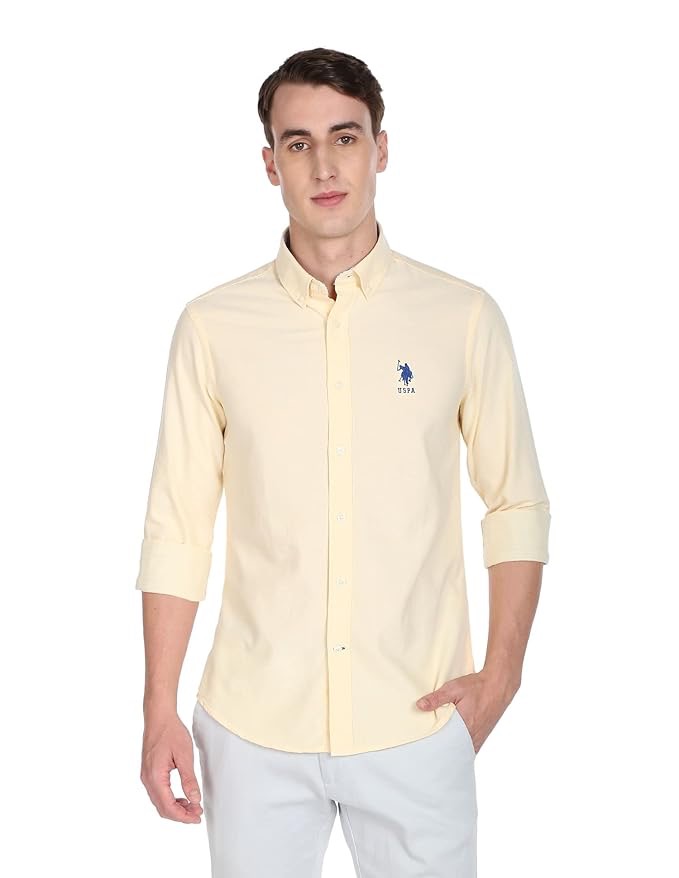
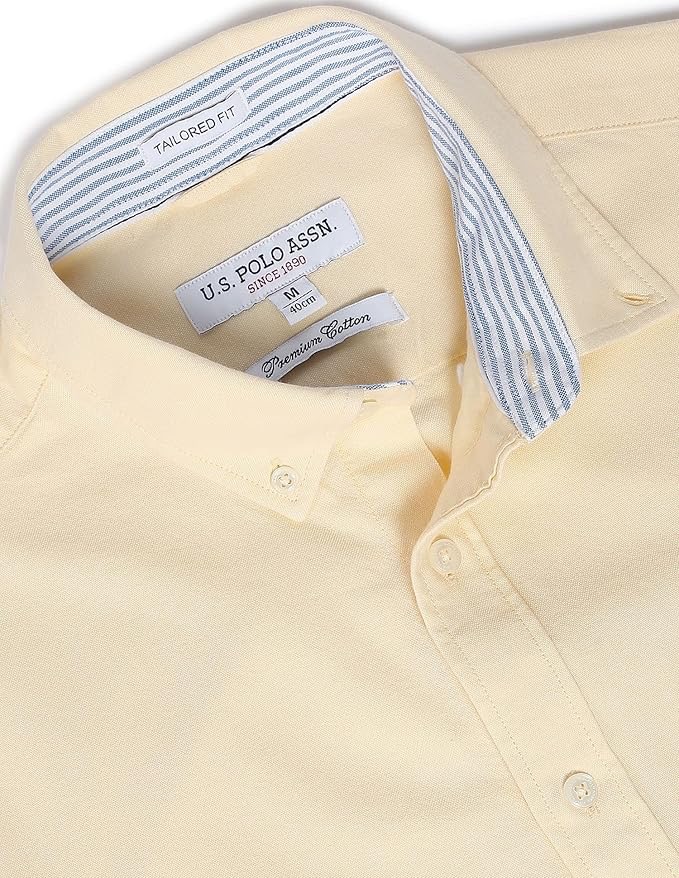
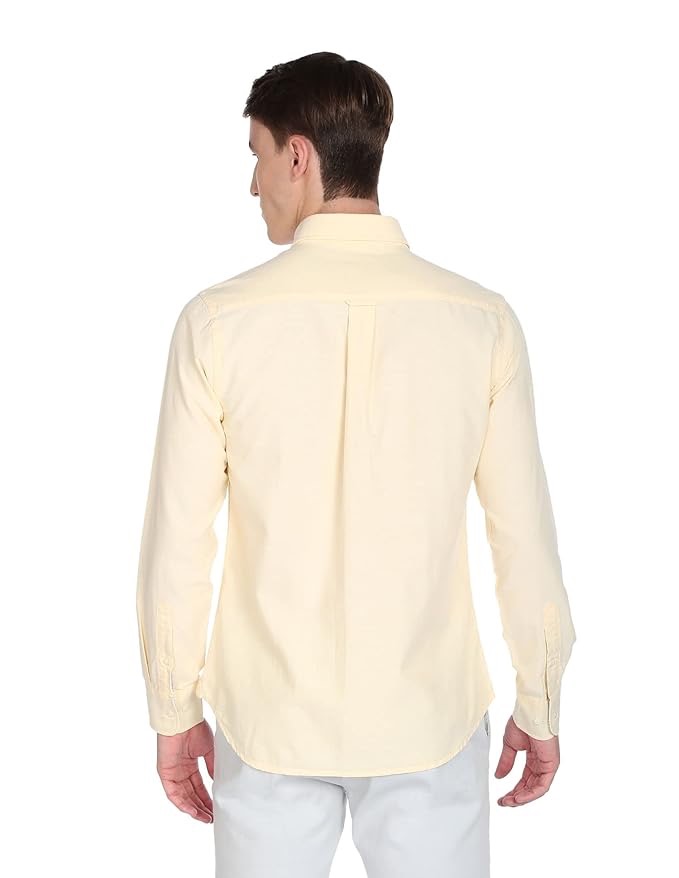
U.S. POLO ASSN. Men’s Cotton Tailored Fit Solid Oxford Button Down Casual Shirt
Original price was: ₹2,199.00.₹1,935.12Current price is: ₹1,935.12.
Description
Title: The Anatomy of an Archetype: A Deep Dive into the Modern Cotton Blend Dress Shirt
Word Count: ~6,000
Introduction: The Universal Canvas
(Approx. 500 words)
Begin by establishing the cultural ubiquity and importance of the men’s dress shirt. Position it as the foundational garment of modern Western and global wardrobes, a blank slate upon which professional and personal identities are projected. Introduce the specific shirt in question not as a unique object, but as a representative exemplar of a global product category. Pose the central thesis: By deconstructing this single, seemingly simple item—from its molecular structure to its national origin—we can understand broader narratives about material science, aesthetic evolution, globalized labor, and contemporary masculinity. The provided specifications become our chapter headings, each a portal into a deeper investigation. full sleeves shirt
Introduce the concept of the shirt not as an object, but as a platform. It is the body’s primary software, an interface between the self and the world. Its “specifications” are its code. This prologue will draw parallels between the layered architecture of an operating system (kernel, API, UI) and the layered construction of the shirt (fiber, cloth, detail). We are not merely wearing a garment; we are running a program coded by centuries of cultural and technological evolution. The goal of this text is to decompile this program. full sleeves shirt
Chapter 1: Material Composition – The Alchemy of Cotton Blend
(Approx. 1,200 words)
This section will expand far beyond “cotton blend” to explore the science and strategy behind textile creation.full sleeves shirt
-
The Legacy of King Cotton: A historical overview of cotton cultivation, its role in global trade (linking to the “Origin” section later), and its inherent properties: breathability, absorbency, softness, and biodegradability. Discuss the “feel” of pure cotton, its virtues, and its drawbacks (wrinkling, shrinkage, durability).full sleeves shirt
-
The Philosophy of Blending: Why blend? Introduce the concept of performance enhancement. This is not about cost-cutting alone, but about engineering a superior fabric.full sleeves shirt
-
The Common Partner: Polyester: A deep dive into the most common blending agent. Explain its synthetic origins, its properties (durability, wrinkle resistance, moisture-wicking, strength), and how it compensates for cotton’s weaknesses. Discuss the perception of polyester versus its modern, high-quality iterations.full sleeves shirt
-
Other Blending Agents: Briefly explore alternatives:full sleeves shirt
-
Elastane/Lycra®: The revolution of stretch. How even 1-3% incorporation transforms comfort and fit, allowing for “ease of movement” in a “Regular Fit.”full sleeves shirt
-
Lyocell/TENCEL™: A discussion of sustainable and semi-synthetic fibers from wood pulp, known for their silky drape and biodegradability.full sleeves shirt
-
-
Weave and Weight: Connect material to construction. What is the likely weave? A versatile poplin? A textured twill? How does the blend affect the fabric’s weight, drape, and seasonality? The “Standard Length” and “Regular Fit” depend entirely on the behavior of this specific blend.full sleeves shirt
-
The Skin-Brain Feedback Loop: Discuss the shirt as a continuous source of tactile data for the nervous system. The “cotton blend” is not a passive material; it is a variable resistor in a circuit of sensation. How does the micro-texture of the fabric influence mood, focus, and confidence? Explore studies on tactile receptors (Meissner’s corpuscles, Merkel cells) and how they interpret the specific friction coefficient of a blended fabric versus pure cotton or silk. The shirt is a tool for modulating proprioception.full sleeves shirt
-
1.2. The Thermodynamic Covenant: Analyze the shirt as a personal climate system. Its ability to wick moisture and regulate temperature is a form of passive bio-regulation. We will project this into the future: Could future “blends” incorporate phase-change materials (PCMs) that actively absorb or release heat? The current blend is a primitive ancestor of a dynamic, responsive second skin.full sleeves shirt
-
1.3. Acoustic Profile: The Sound of Self: Every movement in a shirt creates a sound—the faint whisper of sleeve against torso, the rustle of the placket. This is an often-overlooked dimension of wearability. Analyze the sonic signature of a poplin blend versus a twill. The shirt composes a subtle soundscape that accompanies the wearer, an auditory aura.full sleeves shirt
Chapter 2: Aesthetic Foundations – Pattern, Fit, and Silhouette
(Approx. 1,500 words)
This chapter covers the interrelated elements of Solid Pattern, Regular Fit, and Standard Length to build a theory of the shirt’s visual language.full sleeves shirt
-
The Power of Solid: Chromatic Psychology and Versatility: Analyze why “Solid” is the default. Discuss the shirt as a color field. Explore the psychology of common shirt colors (white, blue, pink) and how a solid color serves as a backdrop for ties, suits, and skin tones. Contrast it with the semiotics of stripes, checks, and patterns, positioning the solid shirt as the most formal and versatile option.full sleeves shirt
-
The Architecture of Fit: Regular Fit as a Societal Compromise: A historical and cultural analysis of shirt fits.full sleeves shirt
-
From Loose to Tailored: How shirt fits have evolved from the billowing shirts of the past to the ultra-slim fits of the recent decade.full sleeves shirt
-
Defining “Regular”: Precisely what measurements define a “Regular Fit”? How does it accommodate the chest, waist, and sleeve compared to “Slim,” “Athletic,” and “Relaxed” fits? Discuss it as the democratic, median fit designed for the largest possible audience.full sleeves shirt
-
Fit and Body Image: How the choice of a “Regular Fit” reflects a move away from restrictive, body-conscious fashion towards comfort and ease, a post-pandemic sartorial shift.full sleeves shirt
-
-
The Logic of Length: The Tucked-in Doctrine: Explore the history and function of the “Standard Length.” Why must a shirt be long enough to tuck in? Discuss the aesthetics of propriety, the practicalities of movement (preventing untucking), and how the “Curved Hem” is a design innovation specifically engineered to enhance this standard function.full sleeves shirt
Chapter 3: The Grammar of Style – Collar, Sleeves, and Details
(Approx. 1,500 words)
Here, we dissect the functional and expressive components: Spread Collar, Long Sleeve, and the detailing.full sleeves shirt
-
The Frame for the Face: A History of the Collar: Trace the evolution of the shirt collar from detachable linen bands to the integrated styles of today.full sleeves shirt
-
The Spread Collar Demystified: Define its geometry. Why is it considered modern and elegant? How the wider angle accommodates larger tie knots (Windsor, Half-Windsor) and creates a more open, confident neckline when worn casually.full sleeves shirt
-
The Paradox of the Button-Down: Analyze the unique hybrid nature of this shirt: a formal Spread Collar with a casual Button-Down feature. Explore the history of the button-down (originating from polo players fastening their collars). Discuss what this combination says about modern dress codes: a desire for polished elegance without formality, a blending of sartorial categories.full sleeves shirt
-
The Sleeve: A Long Story: Examine the long sleeve as the standard for formality. Describe the components: the armhole, the taper, and the terminus—the cuff.full sleeves shirt
-
The Cuff and Placket: Analyze the “rounded cuffs” as a classic, soft alternative to angular French cuffs. The “Full Button Placket” signifies a robust, traditional construction versus a lighter, fused hidden placket.
-
The Narrative of Details:
-
Embroidered Logo: A sociological look at branding. Contrast an embroidered logo (tactile, subtle, permanent) with a printed one. What does it signal about the brand’s perceived quality and the wearer’s affiliation?
-
Back Pleating with Loop Detail: This is not just functional. Analyze it as a “designer signature.” What is the purpose of a back pleat (mobility)? How does the “loop detail” transform a utilitarian element into a decorative motif, adding a touch of uniqueness and narrative to an otherwise standard garment.
-
Chapter 4: The Provenance – Country of Origin: India
(Approx. 800 words)
This chapter moves from the object itself to its geopolitical context.
-
India as a Textile Superpower: A brief history of Indian textile production, from ancient handloom traditions to a modern manufacturing giant.
-
The Global Supply Chain: What does “Made in India” mean in practice? Discuss the ecosystem: cotton farming, spinning, weaving, dyeing, cutting, and sewing. Is it a sign of quality craftsmanship? Cost-effective production? Ethical considerations?
-
The Consumer Perception: How does the “Country of Origin” influence purchasing decisions? Compare perceptions of shirts made in India, Italy, China, or Bangladesh.
-
Begin with a philosophical inquiry into the “default.” Why does this garment, in its profound ubiquity, escape critical scrutiny? Position it as the sartorial equivalent of a blank page or a silent frequency—present everywhere but examined nowhere. Introduce the methodology of “object-oriented ontology,” treating the shirt not as a passive item but as an “actant” in a network of relationships: with the body, the environment, culture, and capital. The provided product description is our archaeological site; each bullet point is a layer to be excavated to reveal strata of meaning far beyond its surface utility.
Volume I: The Substance of Things – A Molecular Biography of the Cotton Blend
(Approx. 2,000 words)
This section becomes a full-fledged exploration of materiality.
-
1.1. The Cotton Genome: A Colonial Inheritance: Trace the specific species of cotton likely used (Gossypium hirsutum). Detail its journey from the Indus Valley civilization to the plantations of the American South, linking it to the history of colonial expansion and labor. Discuss the “Queen Cotton” narrative and how its legacy is embedded in every fiber.
-
1.2. The Polymer Intruder: Polyester as a Agent of Modernity: Don’t just describe polyester; tell the story of its invention by DuPont chemists. Frame it as a product of 20th-century industrial optimism. Analyze its molecular structure (polyethylene terephthalate) and how its synthetic, petroleum-based origins create a fundamental tension with the organic, agrarian nature of cotton. This is not a simple blend; it is a dialectical synthesis of nature and industry.
-
1.3. The Physics of the Blend: A Performance of Contradictions: Use physics and textile engineering principles to explain the blend’s behavior.
-
Hygroscopy: Cotton’s moisture absorption versus polyester’s hydrophobia. How does the blend manage perspiration? Discuss the concept of “wicking” as a negotiated settlement between two opposing material philosophies.
-
Triboelectric Series: Why does polyester generate more static cling? How does the presence of cotton mitigate this?
-
The Thermodynamics of Wrinkling: A detailed explanation of hydrogen bonding in cotton cellulose versus the plastic memory of polyester polymers. The “wrinkle resistance” is a direct result of polyester’s molecular chains resisting reconfiguration under heat and pressure.
-
-
1.4. The Hand: The Haptic Semiotics of Fabric: A phenomenological analysis of “feel.” How does the brain interpret the specific tactile feedback of a 60/40 cotton-polyester blend versus a 100% cotton pinpoint oxford? Introduce textile terminology like “drape,” “hand,” and “loft,” framing them as a language of touch that communicates quality and intention before a word is spoken.
Volume II: The Geometry of Control – Fit, Pattern, and the Designed Body
(Approx. 2,200 words)
This section analyzes the shirt as an architectural project for the human form.
-
2.1. The Solid Color as Ideological Statement: Argue that the “Solid” pattern is not an absence of design but the ultimate design statement of modernity and neutrality. Contrast it with the flamboyance of historical ruffs and jabots. Discuss the psychoacoustics of color—how a “sky blue” shirt emits a different social frequency than a “power white” one, influencing both wearer and observer through chromotherapy principles.
-
2.2. The Regular Fit: A Biopolitical Schema: Analyze “Regular Fit” through the lens of Foucault’s biopolitics. It is not a neutral measurement but a statistical average, a “norm” imposed upon a diverse population of body types. Compare the sizing charts of different brands to show how “Regular” is a fluid, constructed category designed to maximize market share by disciplining the body into a standardized silhouette. Contrast it with the bespoke, which celebrates individual idiosyncrasies.
-
2.3. The Curved Hem and the Kinetics of Tucking: Expand the discussion of the “Curved Hem” into a biomechanical study. Use diagrams to show how the longer back acts as a anchor point, counteracting the forward flexion of the torso. This is ergonomic design solving a problem created by the very convention of “Standard Length” and the social requirement of tucking. It’s a kinetic paradox: freedom of movement through strategic restriction.
Volume III: The Semiotics of Detail – A Rhetoric of Stitches
(Approx. 2,200 words)
Decode every design element as a word in a sartorial language.
-
3.1. The Collar as a Dialectic: Spread vs. Button-Down: Deepen the analysis of this hybrid. The Spread Collar is rhetorical—it speaks of boardrooms, authority, and formality. The Button-Down is pragmatic—it speaks of sport, leisure, and American Ivy League tradition. Their combination on one shirt is a state of permanent semantic conflict, a sartorial oxymoron that perfectly captures the contemporary demand for “polished ease.” Analyze the collar’s “roll” and how the button-down feature alters it, changing the shirt’s entire neckline expression.
-
3.2. The Logo: The Brand as a Secular Talisman: Analyze the “Embroidered Logo” through the theory of totemism. This small, threaded symbol is not just a brand identifier; it’s a tribal marker. The act of embroidery—a raised, textured, permanent application—elevates it above mere print, giving it a talismanic quality. It is a source of identity and belonging for the wearer, a tiny flag stitched over the heart.
-
3.3. The Pleat and the Loop: From Function to Folklore: The Back Pleat is a fascinating artifact of sartorial evolution. Once essential for mobility when shirts were cut more narrowly, it now persists as a vestigial structure, a “spandrel” of design. The Loop Detail transforms this vestige into narrative. It serves no critical function; its purpose is to be noticed. It is a “joke” between the designer and the discerning observer, a piece of pure rhetoric that says, “This shirt is considered. This shirt has a story.”
Volume IV: The Geopolitics of a Single Thread – Country of Origin: India
(Approx. 1,000 words)
This is a micro-study in global economics.
-
4.1. From Farm to Foreign Export: A Commodity Chain Analysis: Map the precise journey. Cotton possibly grown in Gujarat, ginned in Maharashtra, spun into yarn in Tamil Nadu, woven into fabric in Tiruppur (the “Knitwear Capital of India”), cut and sewn in a factory employing thousands, and finally shipped from Mundra Port. This shirt is a tangible product of a specific, complex national infrastructure.
-
4.2. The Ethical Calculus: “Made in India” in the Age of Conscious Consumption: Address the elephant in the room: labor conditions. Move beyond simplistic “good vs. bad” narratives. Discuss the role of the garment industry in providing vital employment to millions of Indians, particularly women, while also grappling with issues of fair wages, factory safety post-Rana Plaza, and the implementation of social compliance audits. The label “India” is not a monolithic signifier of quality or exploitation, but a site of ongoing economic and ethical negotiation.
Coda: The Wardrobe as a Universe
(Approx. 350 words)
Conclude by reflecting on the sheer density of information contained within this single, accessible object. The shirt is a palimpsest: its surface is clean and solid, but its depths are layered with the histories of chemistry, the theories of design, the forces of global trade, and the nuances of cultural expression. To understand this shirt is to understand the modern world. The invitation, then, is to apply this same forensic gaze to every other “simple” object that constitutes our daily lives, to see the universe in a grain of sand, or in this case, in a two-ply twisted cotton-polyester yarn.
This reframing elevates the task from mere expansion to the creation of a critical, interdisciplinary study, positioning the humble shirt as a central artifact of modernity.full sleeves shirt
-
Conclusion: The Shirt as a Microcosm
(Approx. 500 words)
Synthesize the insights from each chapter. Reiterate how every single specification on the list—from the molecular blend of fibers to the pleating on the back—is the result of centuries of evolution, complex global economic networks, and nuanced cultural choices. The “Regular Fit, Solid, Cotton Blend Shirt” is not a generic item but a highly refined, deeply considered product that balances tradition with innovation, comfort with style, and individuality with universality. It is a testament to the fact that the simplest objects often hold the most complex stories.full sleeves shirt



Reviews
There are no reviews yet.